
And now a return to slumber
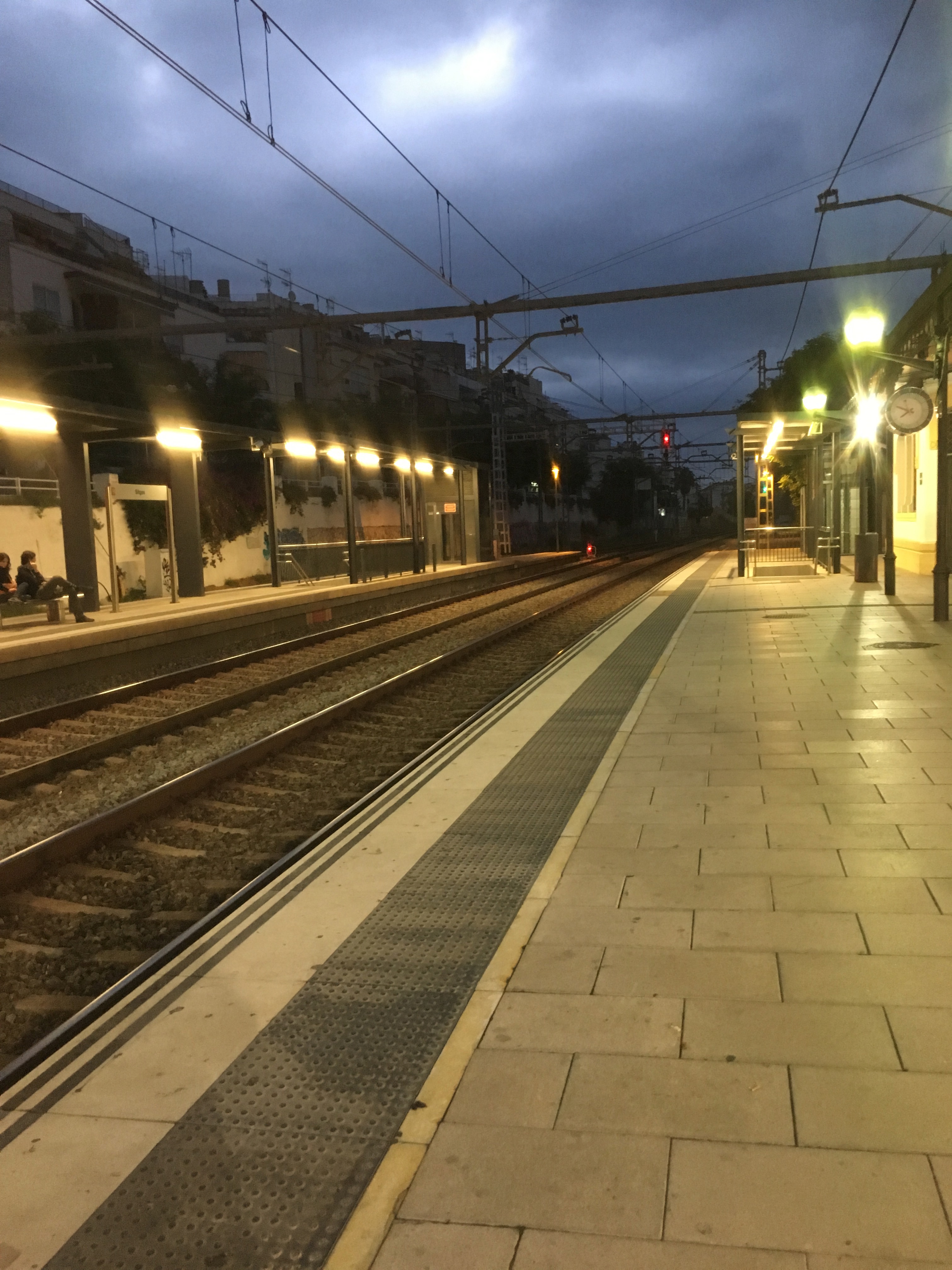
Sitges Station early in the morning
This morning was, by anyone’s standards, an early rise. As someone recently said to Captain Clarke and myself, “a sunrise is always to be respected, but never to be seen”! This morning, we both respected it and saw it. We arose at approximately 06:00 to ablute, complete the packing, check out of the hotel and make our way to Sitges station for the very last time on this trip. The station is only about a 10 minute walk from the hotel, but it is 10 minutes of walking up a relatively steep hill. For those with ‘statin legs’ this is a painful experience, however, none-the-less we made it in very good time to the station. In fact, so early were we that we could have got the earlier train, but we decided against it and procured a coffee and a croissant in the station bar, (€4 for two coffees and two croissants!).
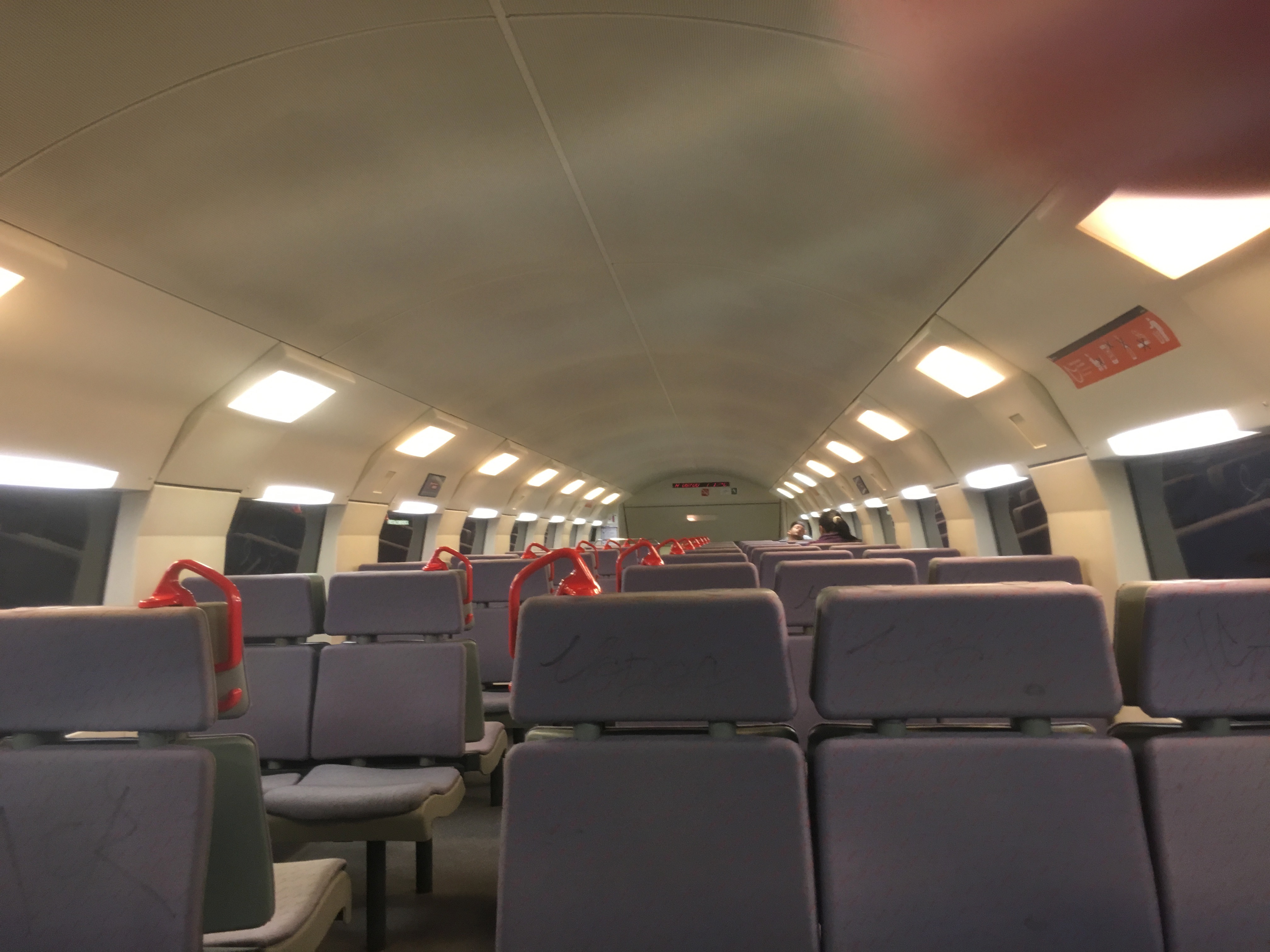
Another busy train to Barcelona
Our train arrived, (on time, but you knew that), and, despite there being a train running every 15 minutes, even on a Sunday, there were very few people on our train. This was quite interesting as, on the train that we had deliberately missed earlier, the previous train had been very busy. We travelled in our now accustomed style of a cool, clean train that made its way along the beautiful coast with the sun rising and on towards Barcelona. We knew we were early – our train didn’t depart from Barcelona until 09:25 – but we wanted to be sure that we passed through security at the station in good time and to be sure that we were ready and waiting when the train was ready for boarding. As it was, we needn’t have worried.
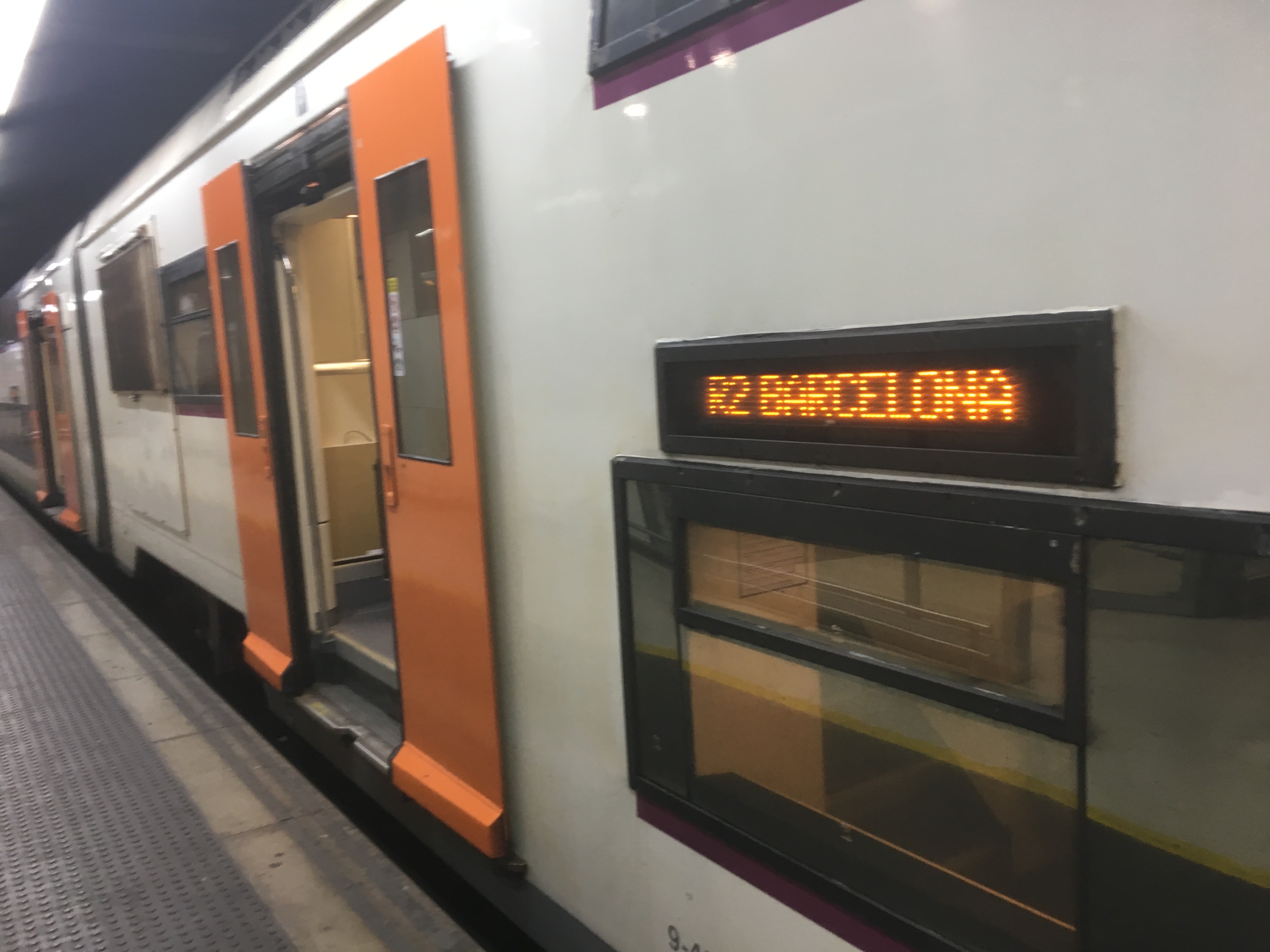
A last look at our train from Sitges
On arrival at Barcelona Sants we made our way towards the ‘fast trains’ area of the station that includes international trains. We passed through security which, honestly, looked far more complex than it was – it was really just a bag scanner, but the people milling around and making a meal out of it, (mainly American as it turned out), made it look a much bigger deal than it was. We had seen this security cufuddle on our earlier trip to Barcelona which is what made us think it would be a big deal, (presumably there were more Americans there at the time – there did seem to be a lot of them about on this trip!). Having passed through security we made our way to the waiting area.

Our train to Paris
Now, I should say at this juncture, that the waiting area is perfectly comfortable but, that said, we could easily have got either of the two later trains than the one that we did to Barcelona. Despite it being listed for ‘Via 5’, (platform 5), from before we got there, the train was not actually ready for boarding until around 09:10 when a large number of people all began to queue agitatedly to have their tickets checked so that they could make their way down to the platform. It is interesting that our American friends seem to be the ones that get most agitated, (they could give Great Uncle Bulgaria a run for his money!), but the train isn’t leaving without them, they already have an allocated seat and I honestly can’t see what all the fuss is about.
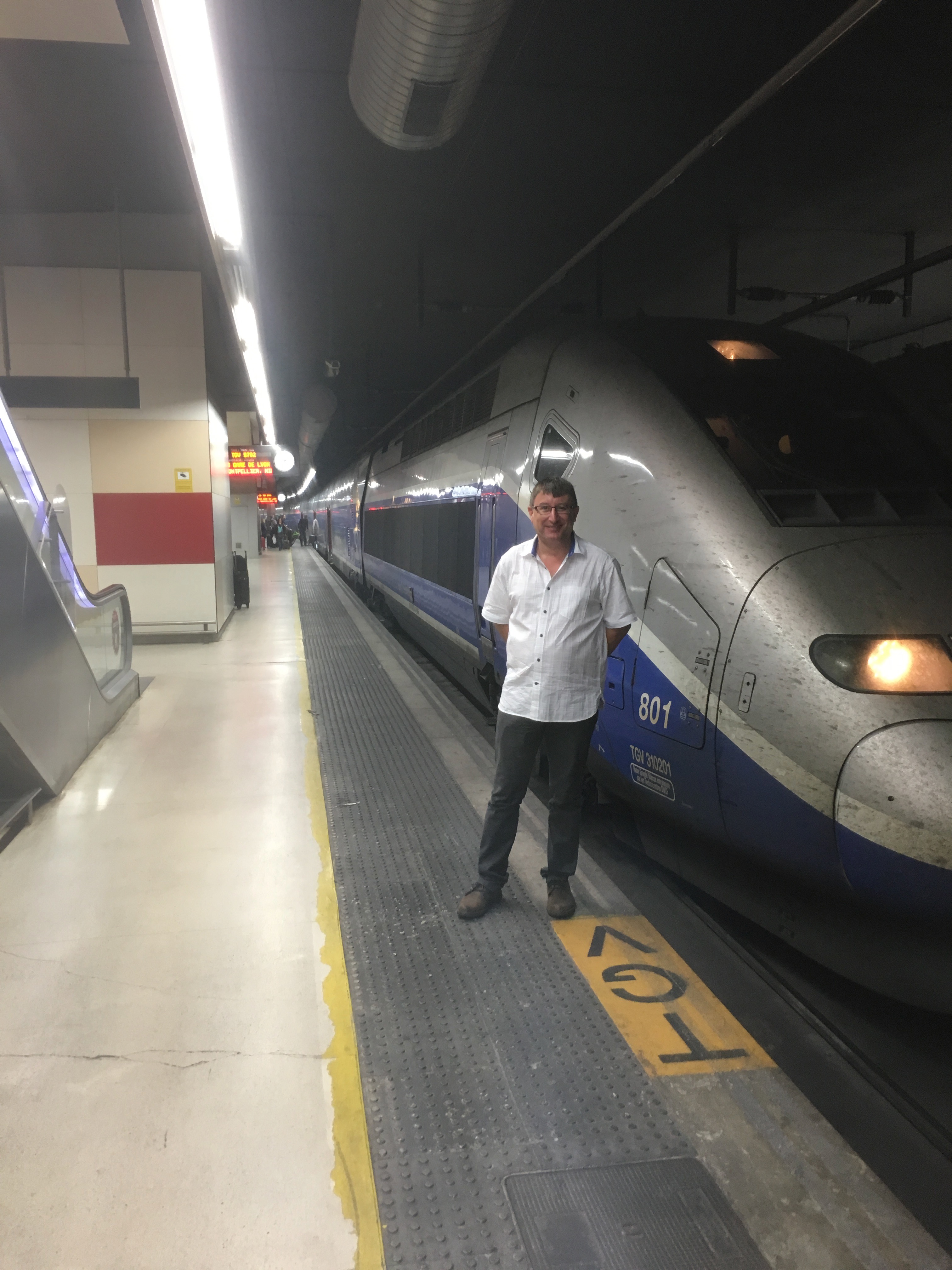
Captain Clarke with the train
Captain Clarke and I made our way down to the platform in a relaxing manner, (just to agitate the Americans more), and decided to get a photo of the train before it departs. We have now learned a few things about both the train and train travel in France and Spain. One interesting thing about train travel in general is that trains ‘drive’ on the left in France and on the right in Spain. When the new line between France and Spain was completed 3 years ago, this presented the designers with a challenge. Ultimately, they designed, (and it was built), a kind of flyover where the trains seamlessly change sides on the French/Spanish border. All very satisfactory! The other thing that we have learned is that, although the service is a RENFE service, (Red Nacional de Ferrocarriles Españoles), the trains running on it are French TGVs, (Train à Grande Vitesse). This is because the Spanish don’t have sufficient AVE trains, (Alta Velocidad España), because they are all engaged on the Madrid/Barcelona and Barcelona/Malaga runs. There is nothing wrong with a French TGV though and the train is very comfortable.
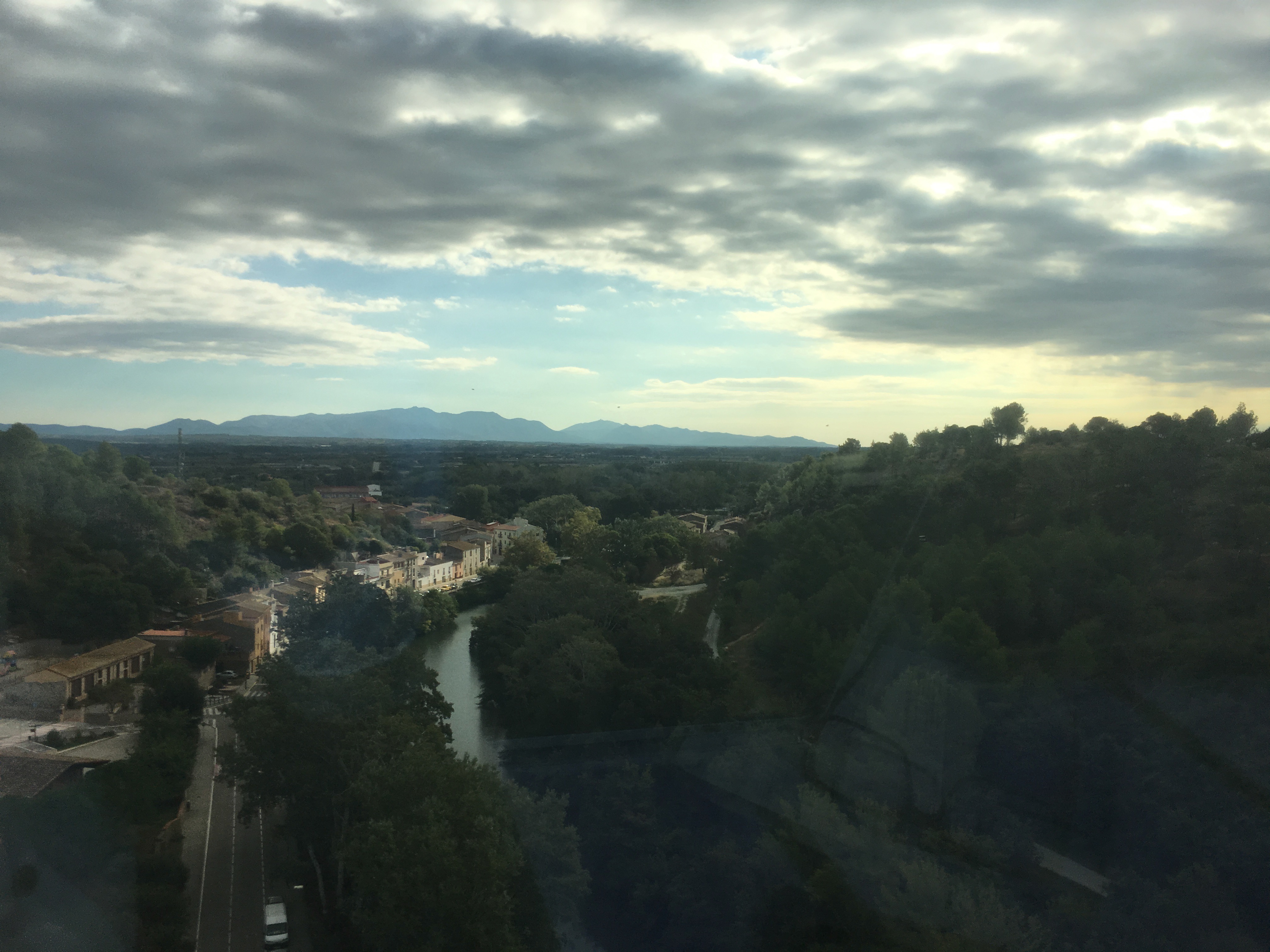
On the journey to Paris
The journey back has been as spectacular as it was going. The countryside as we travelled though Spain was as it should be – arid but fertile and full of agricultural businesses. Just after we passed ‘La Jonquera’, (which is a service area just inside Spain), we entered the new tunnel which was built through the Pyranees as part of the new fast line. The tunnel is 8km long and takes just a few minutes to pass through. Once through, the scenery instantly changes and, for reasons I can’t explain, looks French. Passing through ‘La Camargue’ the huge salt lakes, flamingos and, of course, white horses can be seen as we whip through the countryside. The train makes its way via Perpignon to Narbonne and from there onto Montpellier.
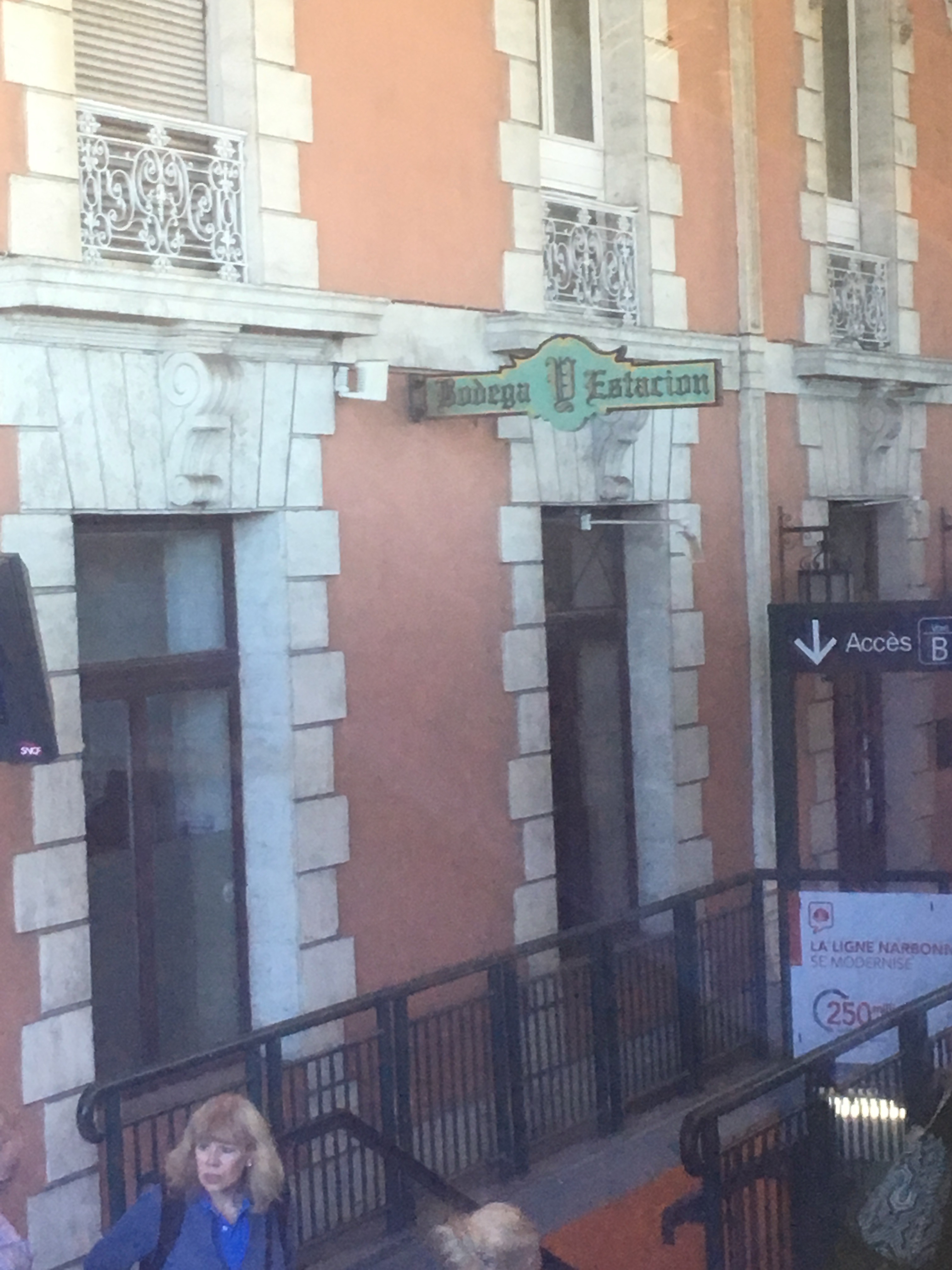
The station bar in Narbonne
The last time that Captain Clarke and I arrived in Narbonne by train was 22 years ago when we last got a train from Barcelona to Paris. On that occasion the train from Barcelona to Cerbère took 3½ hours. We then changed trains onto a French train that had no buffet car, no facilities what-so-ever and took 14½ hours to get to Paris. When we arrived at Narbonne, we dashed down the platform, (lighting a fag on the way), and into this bar where we ordered ‘Deux whisky glace’, which we promptly downed, ordered another one), and ran back onto the train finishing the last of our fag and drink … all in the space of less than 5 minutes! When we eventually arrived in Paris we spent a few hours trying to work out what language to speak. We changed our Pesetas into Francs, (and got a lousy exchange rate), and worked out we had enough money to buy a coffee each! Captain Clarke went up to the bar and said in his best French, “deux cortados s’il vous plait”! The barman, being French, didn’t understand a word of it, (‘cortados’ is Spanish, the rest is French), and so I came to the rescue with “two small coffees with a little warm milk, my good man”. If in doubt put on a really strong English accent and speak with confidence – that or shout louder and more slowly! Just to complete the story, we eventually made our way to Gare du Nord and boarded the second ever Eurostar to travel from Paris to London. Memorable for the fact that the train was full of nerds, (not like I have become over train travel), recording all the announcements and the fact that Captain Clarke had one too many and, when we arrived in London, knocked the customs desk over! (It wasn’t yet fully completed and we were the only ones on the train with cases.)
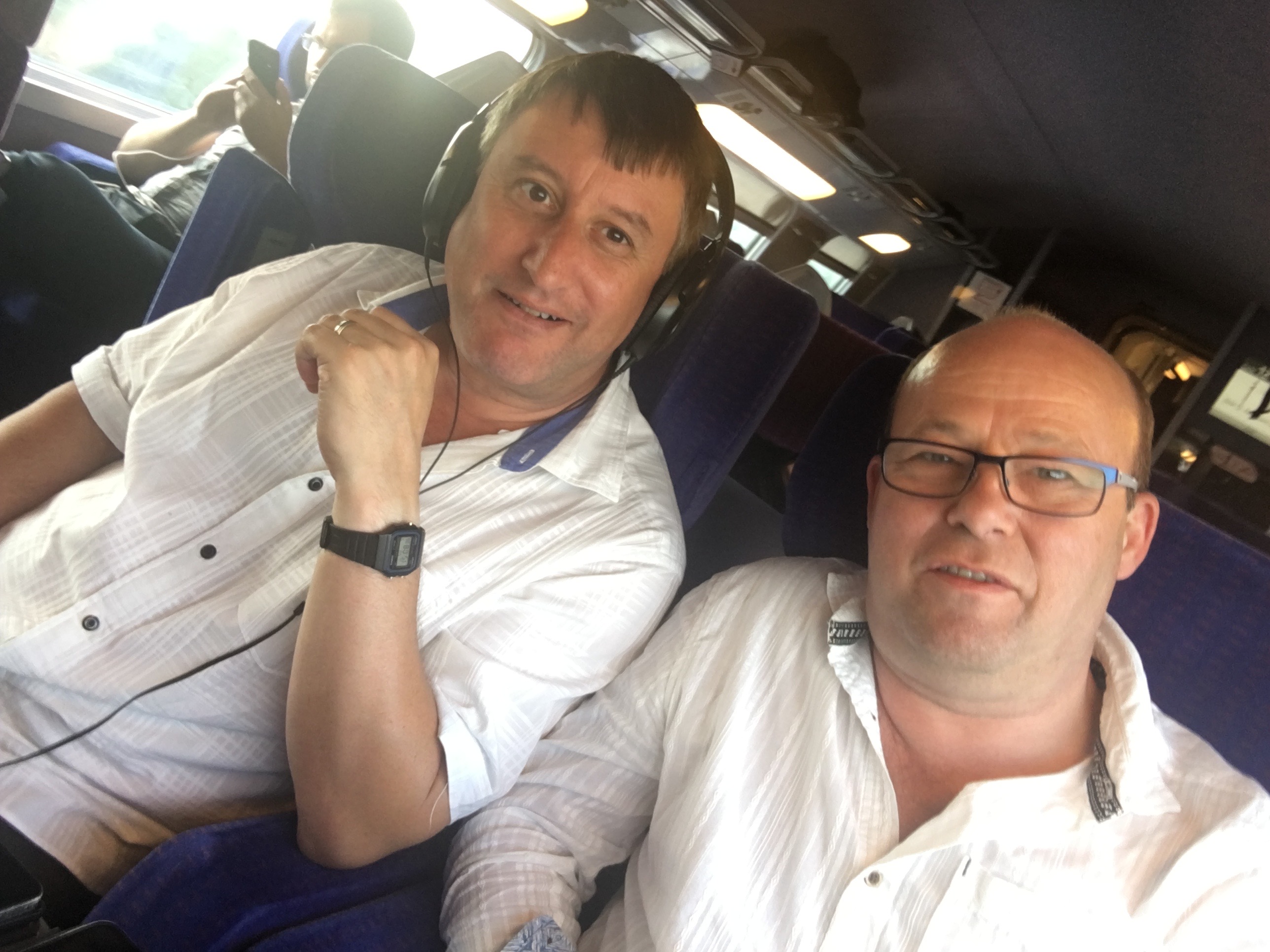
On the train to Paris
Back to our train today. Until we reached Narbonne we were sat opposite two gentlemen who live in Dubai – apparently they sell “very expensive” bathrooms to the locals, (they don’t fit them, just sell them the parts for others to fit!) – they had flown into Barcelona from Dubai and were on their way to Toulouse where, starting tomorrow, they would ride from Toulouse to Monte Carlo, a distance of over 700km over four days for charity. Good luck to them both! The train travels on a slower section between Narbonne and Montpellier before returning to speeds of up to 300km/h. After leaving Montpellier the scenery starts to change. Firstly as one approaches the Rhone/Alps region of France and then latterly as one starts to travel northwards towards Paris. It is immensely difficult to take a decent photograph of the scenery from a train moving at 300km/h and with the sun reflecting on the window, but we did our best and the photos are mainly in today’s gallery.

Arriving at Gare de Lyon
As we arrived back into Paris our train reported the temperature to be 20 degrees celcius. This was quite a shock as it was less than 5 degrees when I checked in the morning. I was carrying both a sweater and a jacket and a higher temperature was not really welcome. We got off the train, made our way down to the RER and got a train to Gare de Nord. I needn’t have worried, the temperature dropped very quickly indeed and the sweater was urgently needed. Although we were quite early, the checkin process was slow. Border control seemed to be particularly slow and security also seemed to be unnecessarily slow. Not that I think that either should be shirked upon, but they could be more efficient than they were.
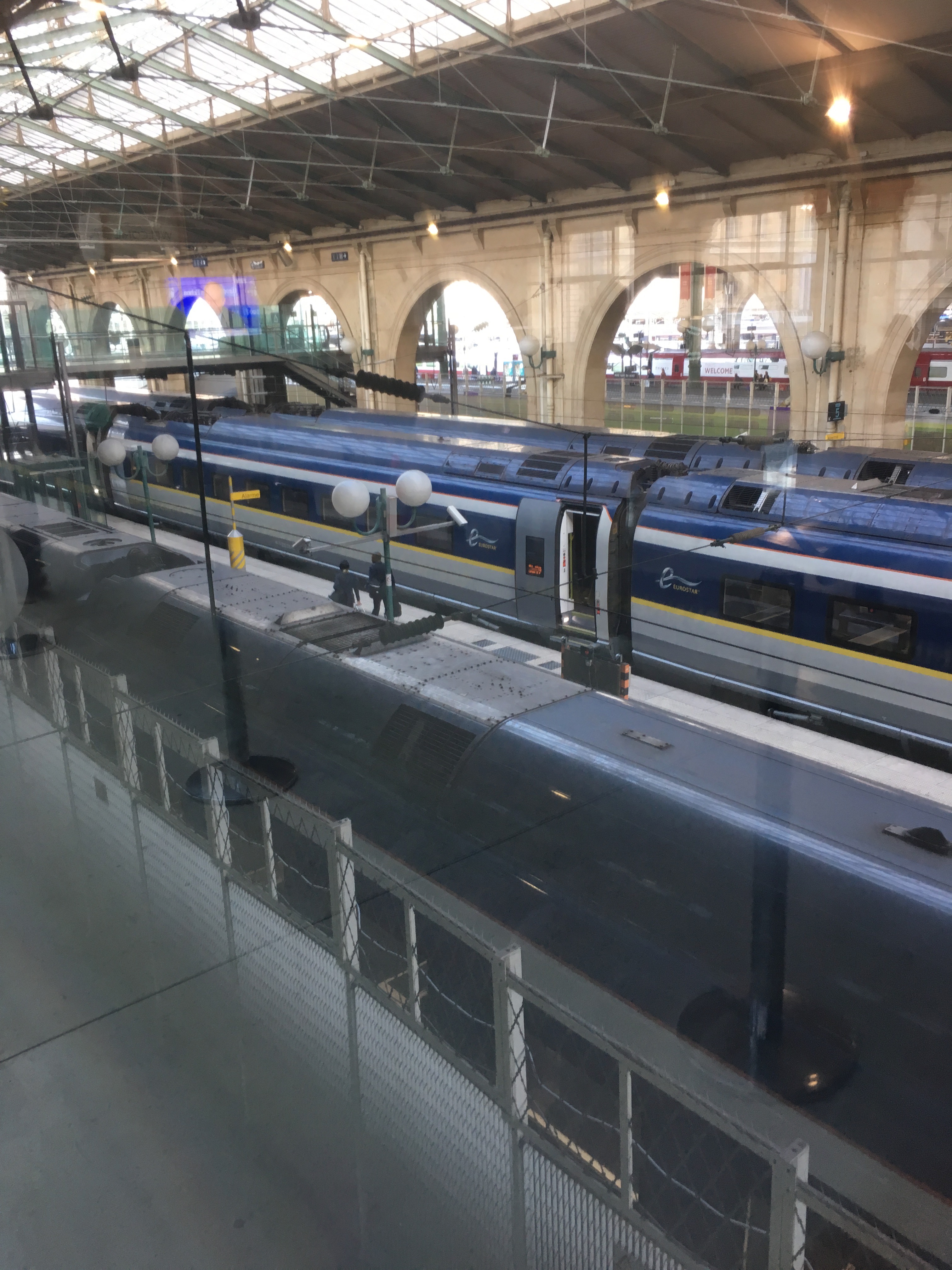
Our Eurostar at Gare du Nord
Once through into the departure lounge, we had about an hour to wait for our train. We could, had we known how efficient the Spanish and French railways had been, have taken the earlier Eurostar, but we had allowed plenty of room for error based on our knowledge and experience of British rail travel. Eventually, our Eurostar was called and we boarded. The train back to Ebbsfleet was good, clean and efficient. On checking, Eurostar is majority owned by the French and the Belgians. The UK government is seeking to sell its 40% stake in it. I wonder if that is because it is too efficient! Arriving in Ebbsfleet the most notable thing was how cold it was. Captain Clarke, who was obviously just wearing a short sleeved shirt, even suggested that I should collect the car and pick him up. Unfortunately, that was impossible, so he had to walk with me to the car. We got into the car and joined the traffic on the A2 and M25. That, if nothing else, reminded us that we were home!
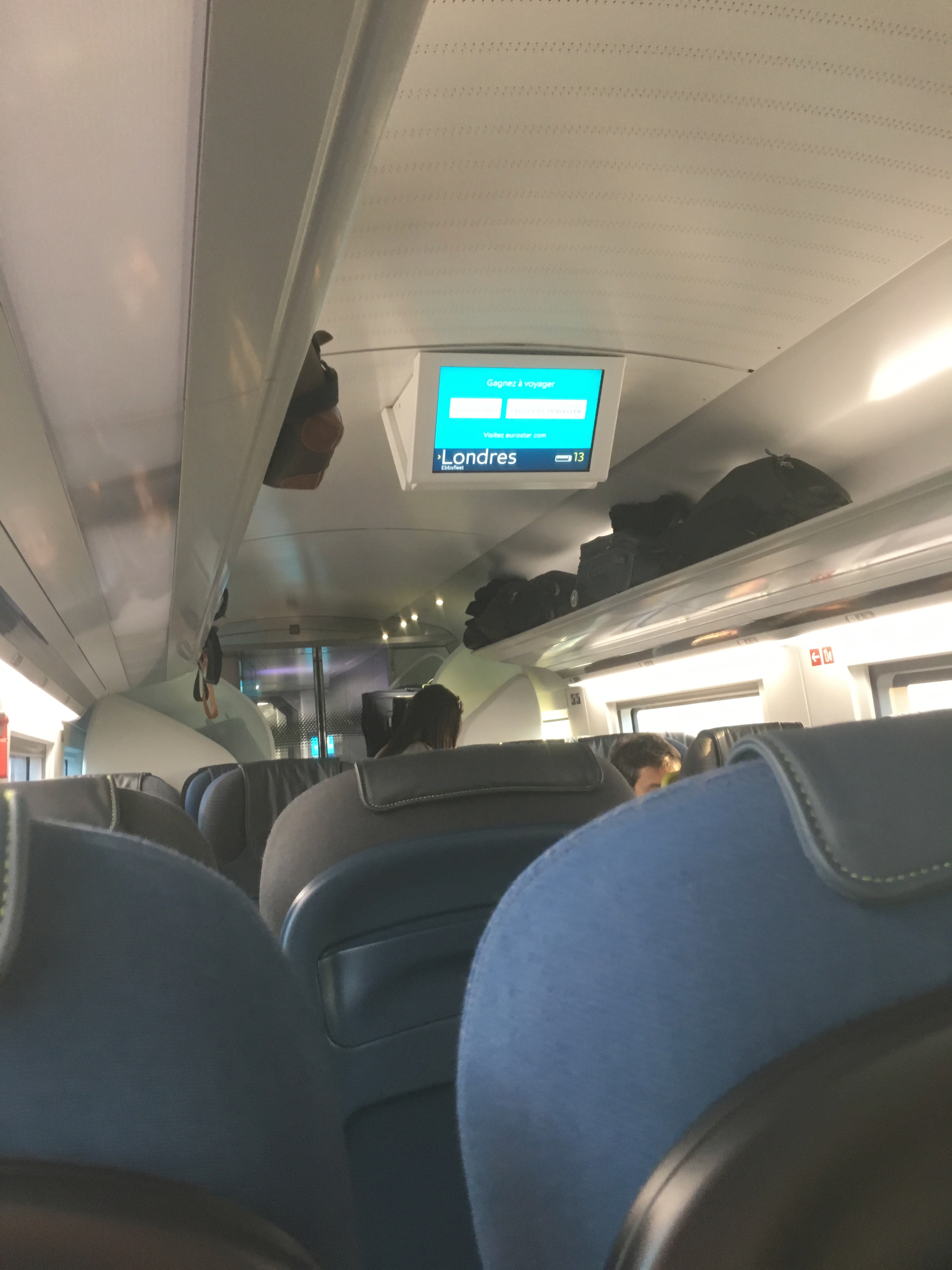
Our final train – Eurostar from Paris to Ebbsfleet
And so, finally, we arrived home at about 20:00. We began the process of unpacking, washing and preparing for work tomorrow. A small libation and a little bit of telly, (we didn’t even turn the TV on in Spain), it is time for sleep. It is time for RudyMenTerry to return to his slumber. So, until the next time, RudyMenTerry will return to his slumber. We hope you have enjoyed these ramblings, we certainly enjoyed our week in Sitges. We will, without doubt, return. It is a fantastic place in a fantastic country and we will definitely use the train again. The rail service in France and Spain is, without doubt, far superior to that in the UK. We should improve our services and sack Southern Rail, it is, without question, RudyMenTerry!

Recent Comments