
Now, about that dot …
As I have previously mentioned, the name of the cruise line is Fred. Olsen. Putting the dot after the Fred is not a typo, there is a reason for it. The company was started in 1848 by three brothers; Fredrik Christian, Petter and Andras Olsen. Fredrik was the older of the three brothers. The dot is to signify the abbreviation of the name Fredrik and has been used as part of the branding of the company ever since it was started. The three brothers were Norwegian, coming from a small town called Hvitsten on the Oslofjord. In Norwegian a dot is the correct punctuation to represent an abbreviation. The company has three cruise ships, the Balmoral which is a slightly smaller cruise ship than the Bolette which is the sister ship to the Borealis that we were on (were, because we are now back home and I am writing this last missive from home). However, the Fred. Olsen Group has many companies and is absolutely huge! To give some idea here are some of the companies in the group:
- Bonheur (the Norwegian holding company)
- First Olsen Tankers (a Norwegian shipping company)
- Fred. Olsen Cruise Lines (that we used and is based in Ipswich)
- Fred. Olsen Express (which is a ferry company based in Spain)
- Fred. Olsen Freight (an international freight company)
- Fred. Olsen Logistics (a UK based logistics company)
- Fred. Olsen Marine Services (a ship and project management company)
- Fred. Olsen Windcarrier (a company shipping and installing wind turbines at sea)
- Fred. Olsen Production (a petrol production platform company)
- Fred. Olsen Renewables (a developer, owner, and operator in renewable energy)
- Fred. Olsen Travel (a travel agency)
- GenoMar (an international aquaculture breeding and distribution company providing genetically improved tilapia to farmers)
- Global Wind Service (a wind turbine installation and servicing company)
- IT Fornebu (a Norwegian IT company which the group has a minority ownership in)
- DN Media Group (a publication company that the group has a minority ownership in)
- Oceanlink (I couldn’t find any information about this company)
- Timex (the group has a minority ownership in this watchmaker)
- The Natural Power Consultants (I couldn’t find any information about this company)
- ZephIR (I couldn’t find any information on the group’s involvement in any company called ZephIR)
So, as you can see, Fred. Olsen Group is not a small group. Some of the companies within the group are very large indeed. Cruising, however, is probably what they are best known for. So, what about this cruise ship? I mentioned that we had had the opportunity to take some photos when the ship was in port in Southampton. Below are some of those photos, that hopefully give a feel of the ship.

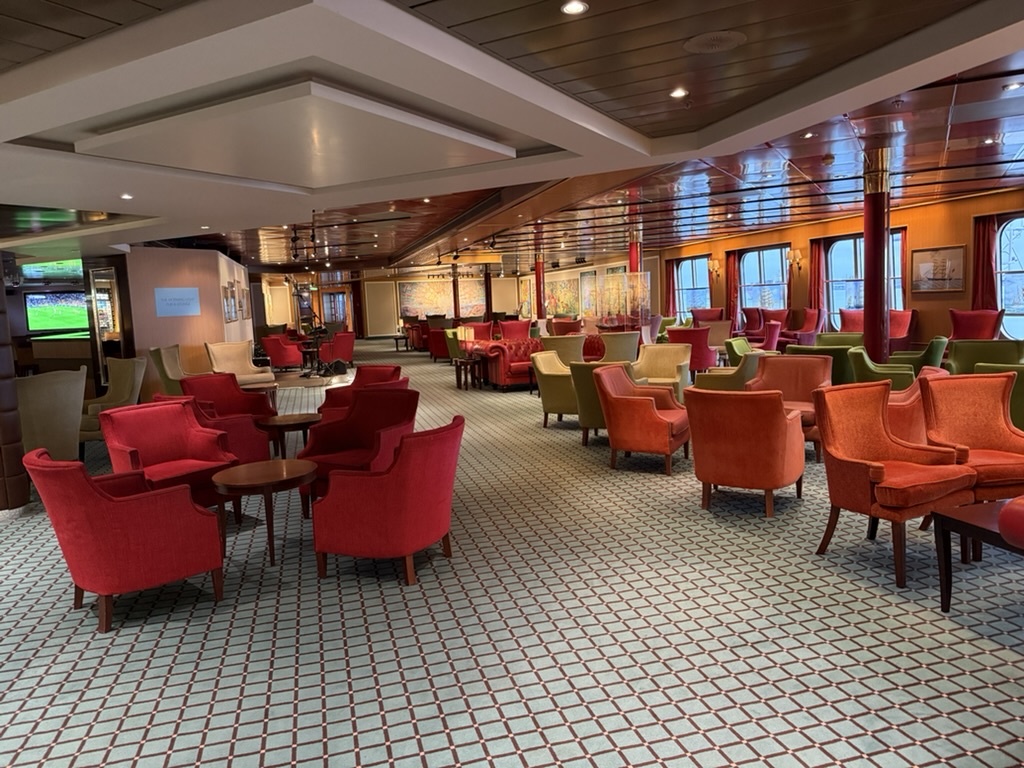

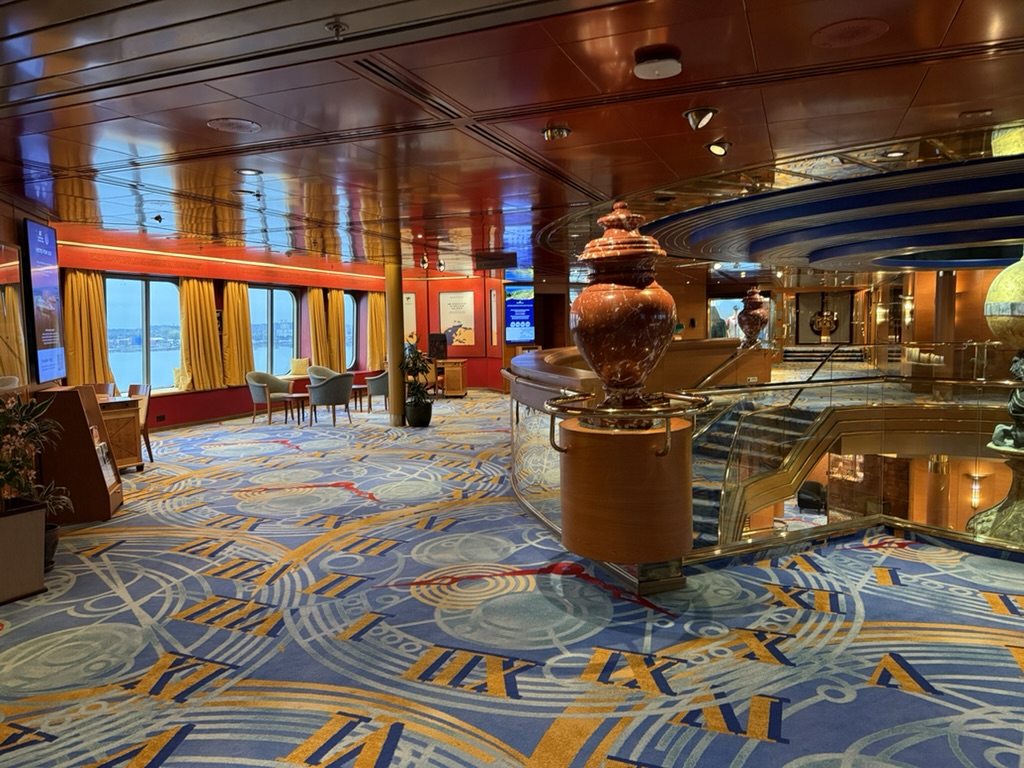

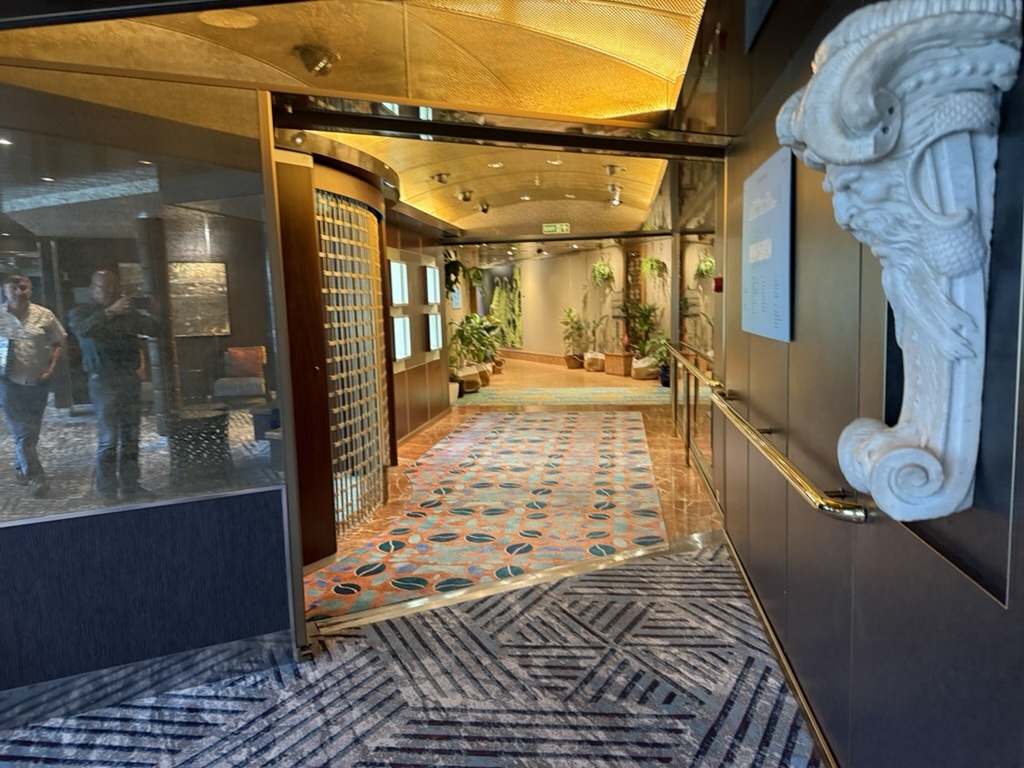
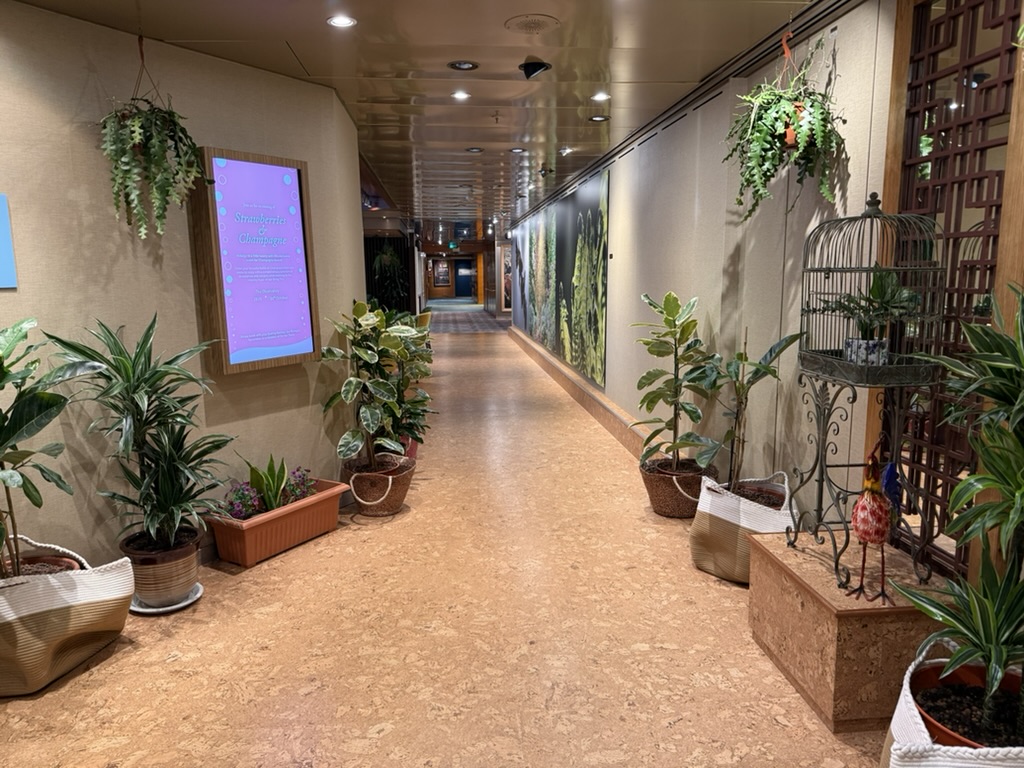
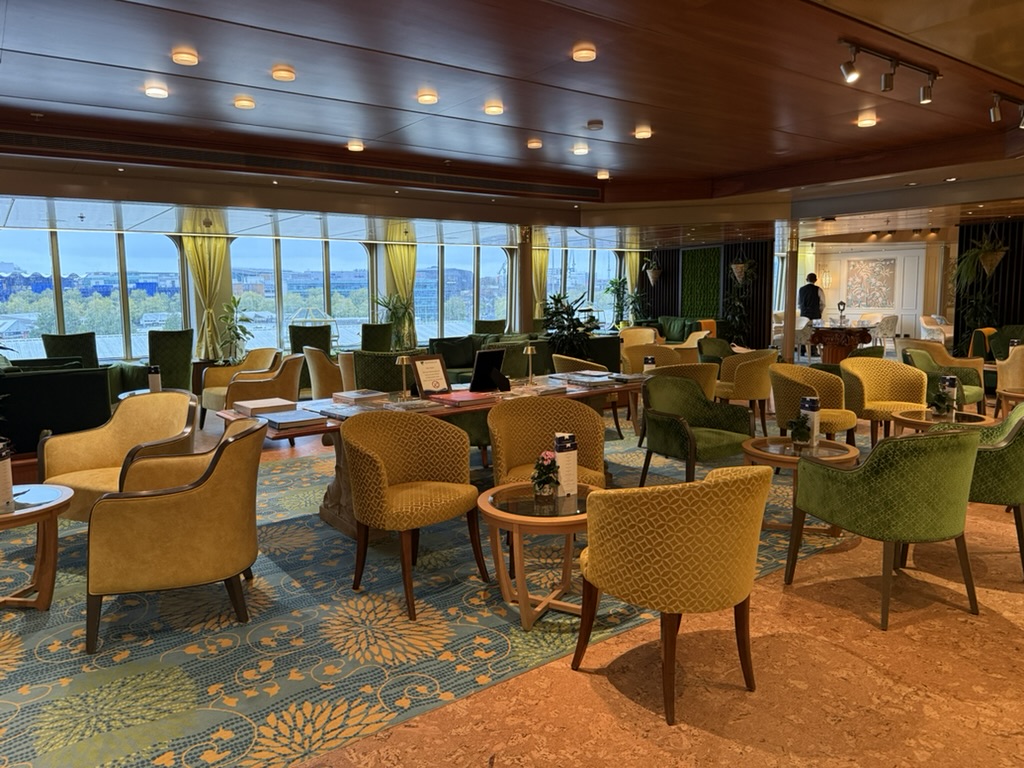

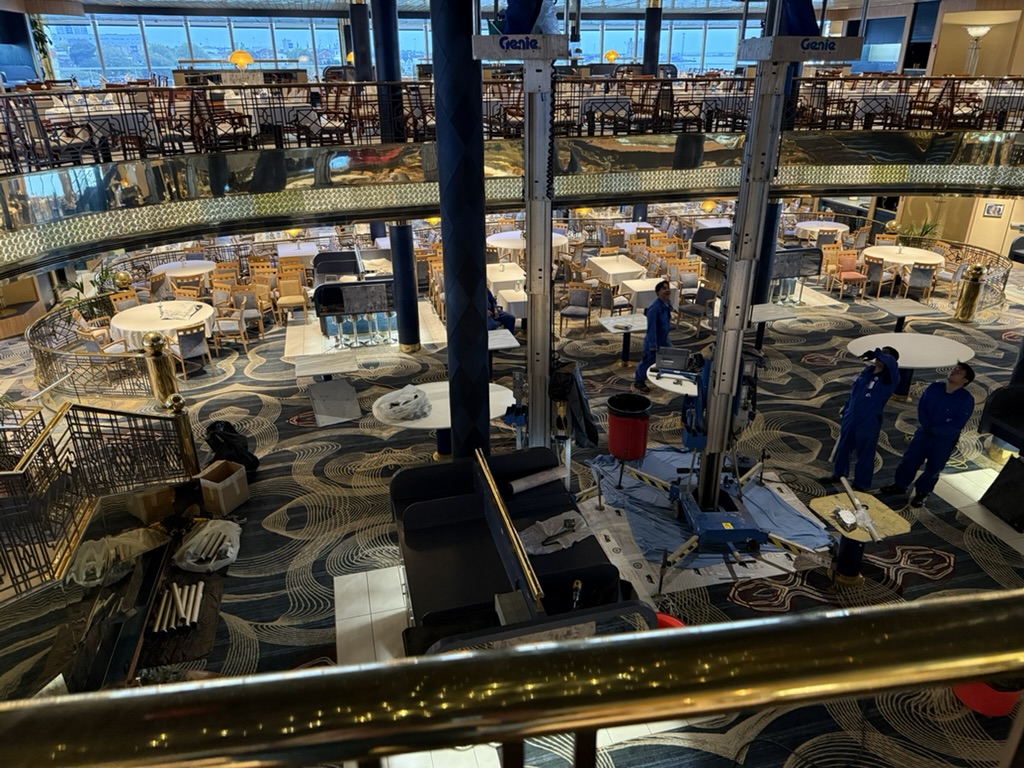
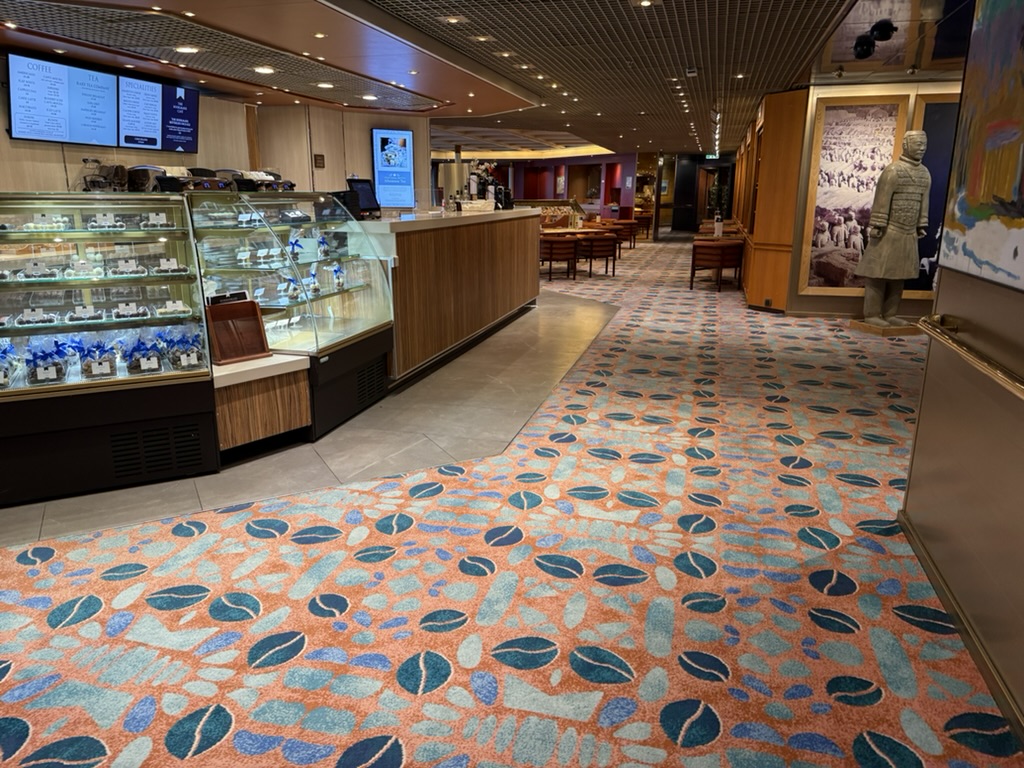
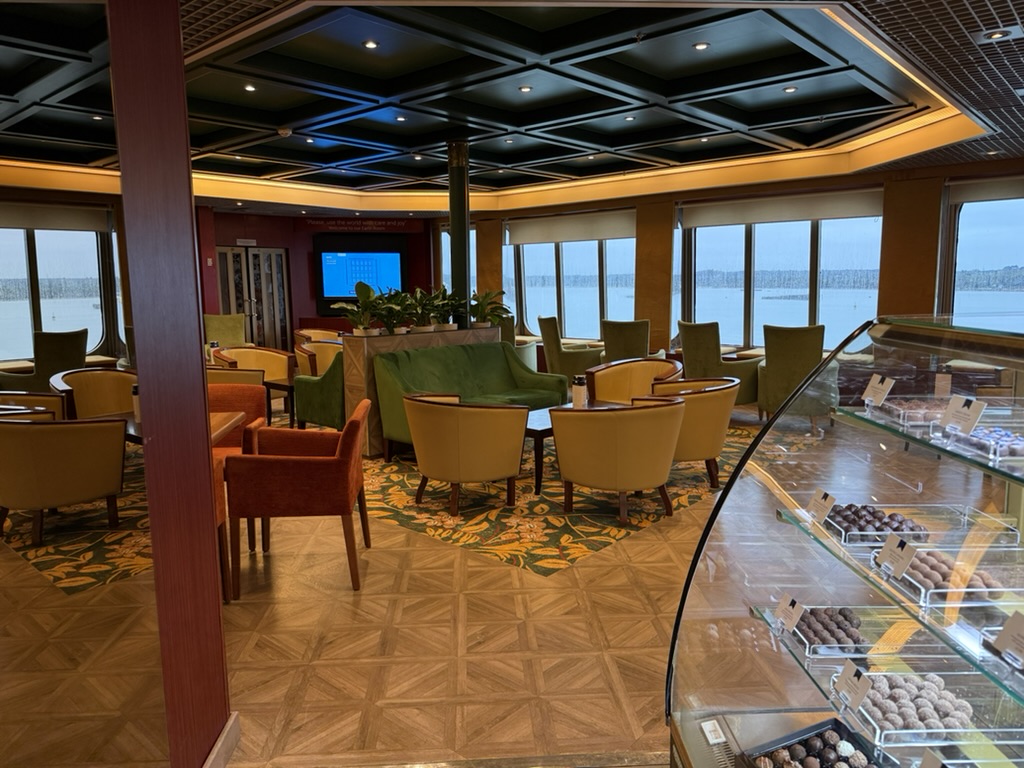
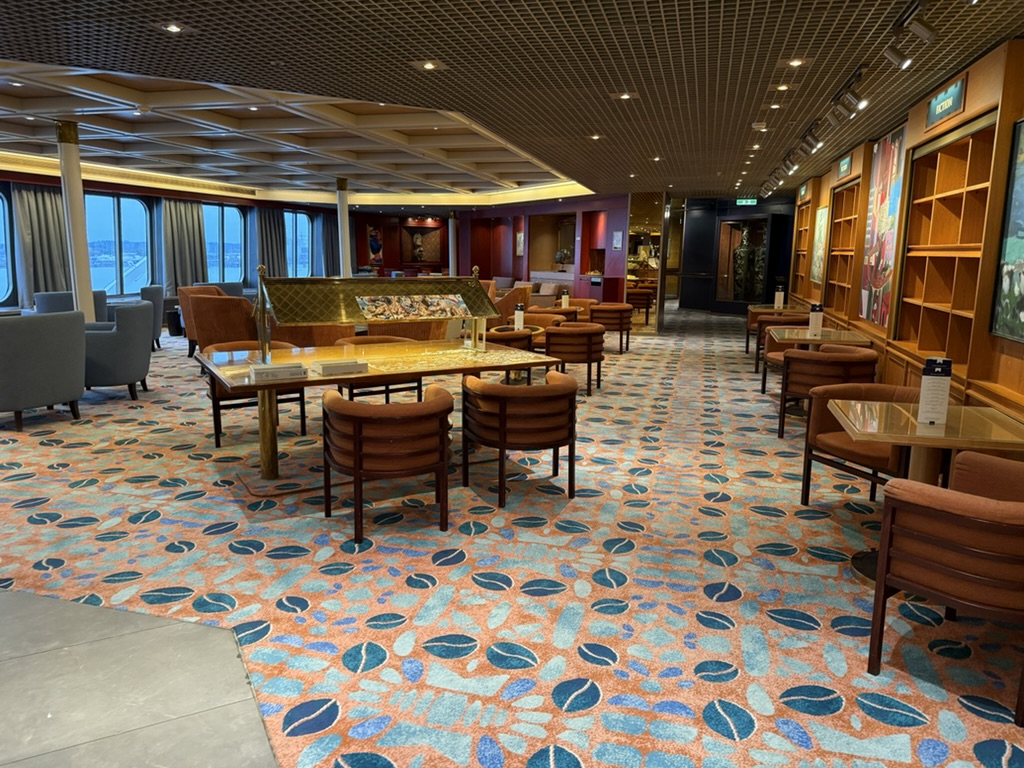
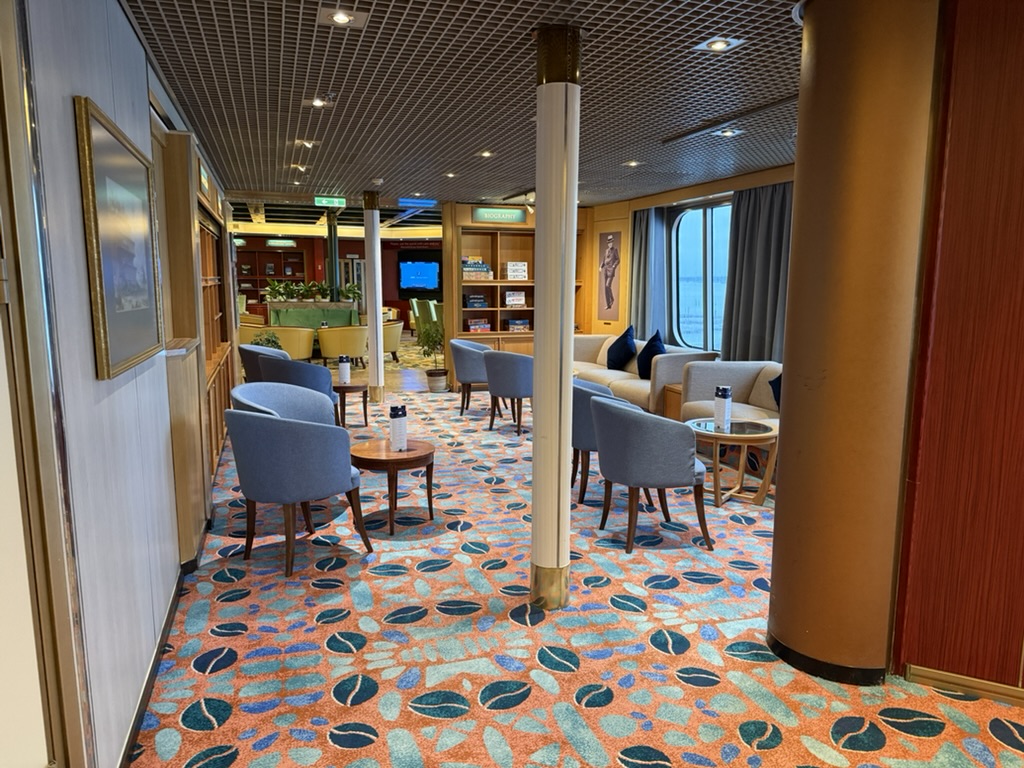

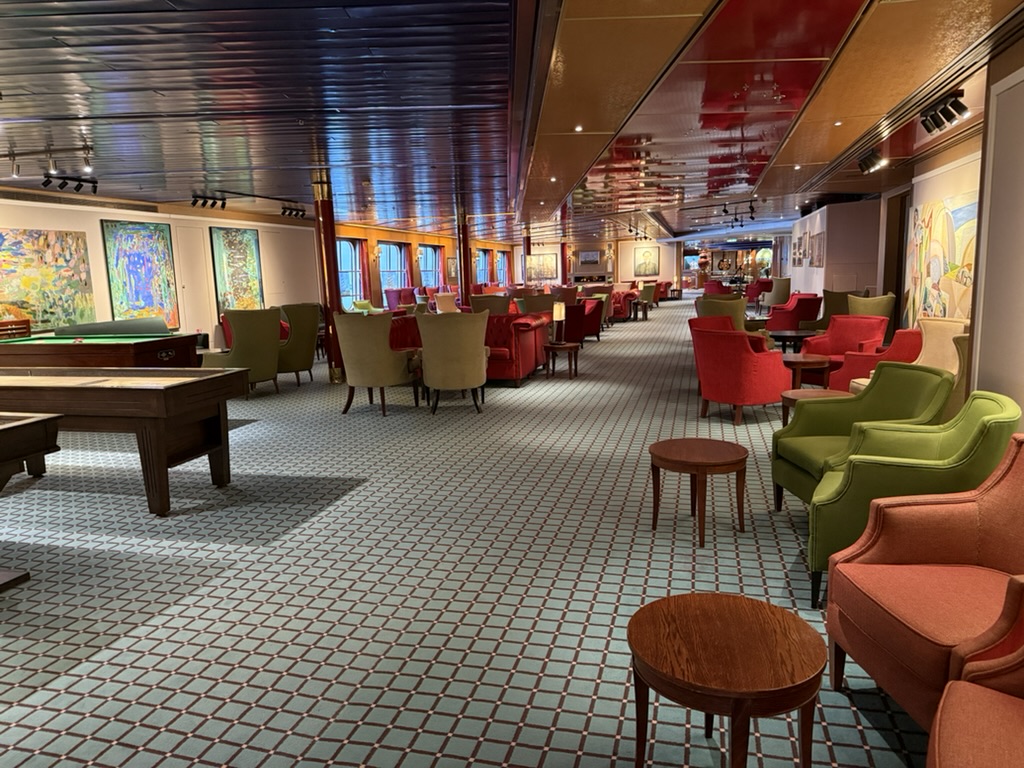
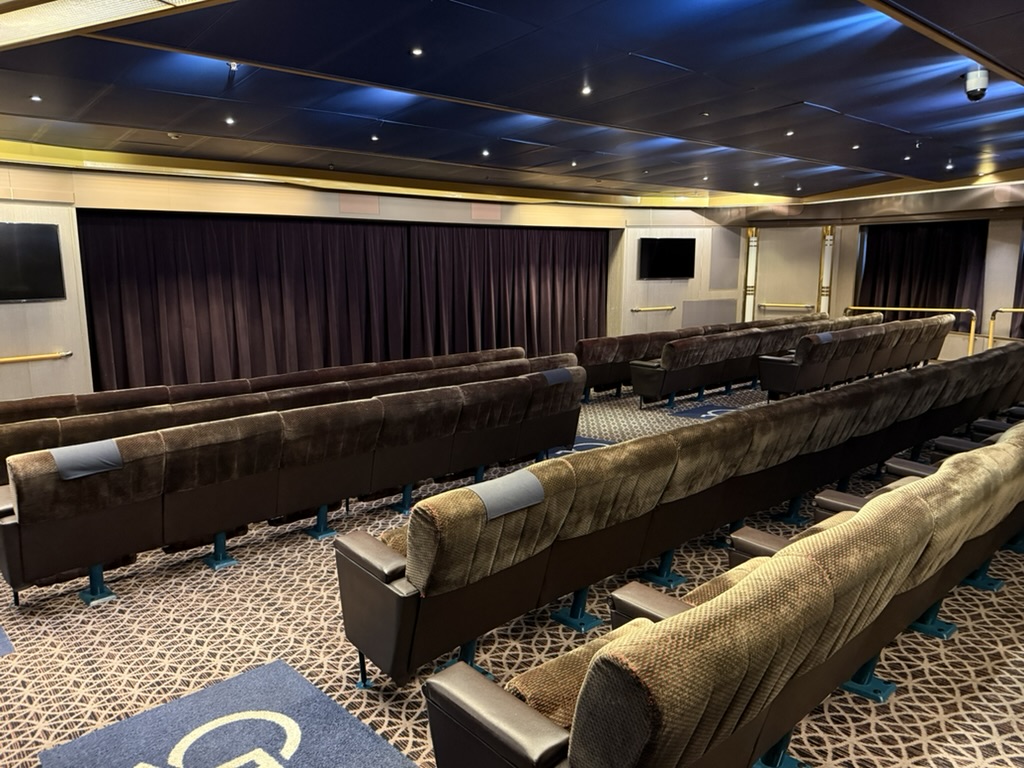
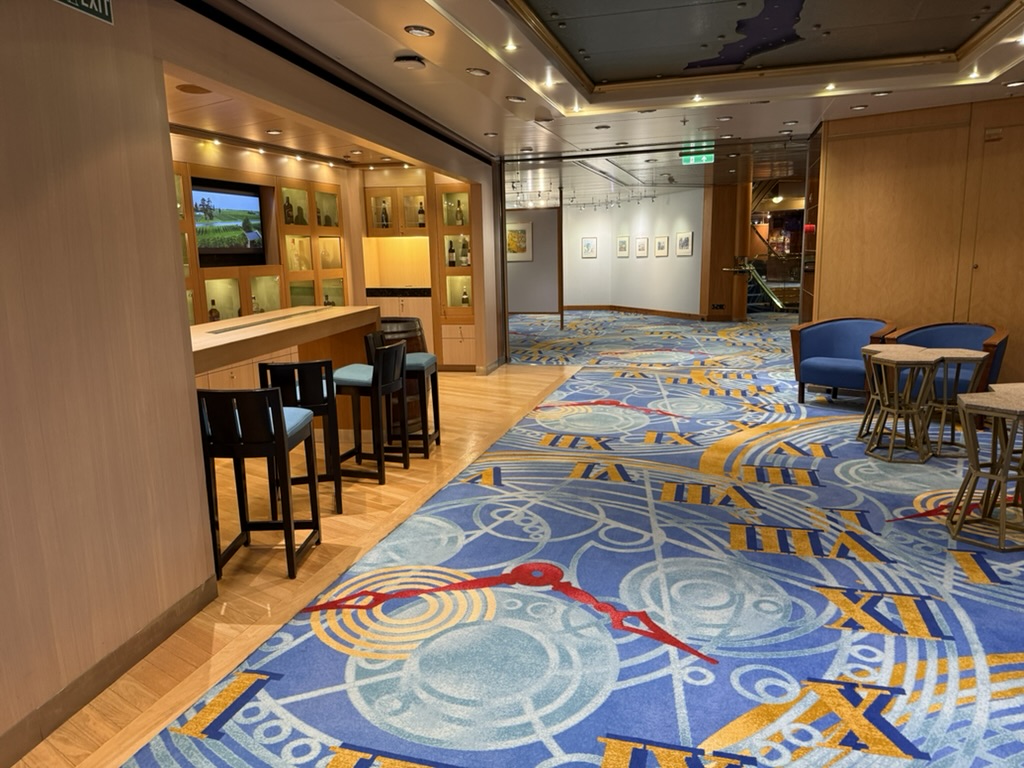


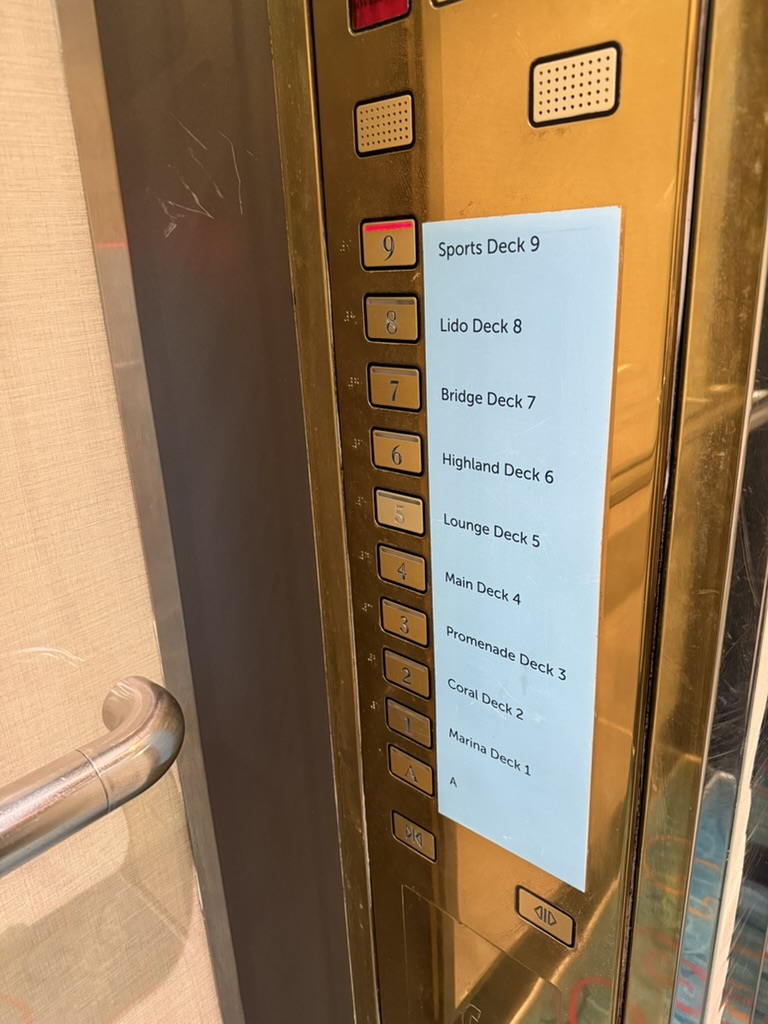
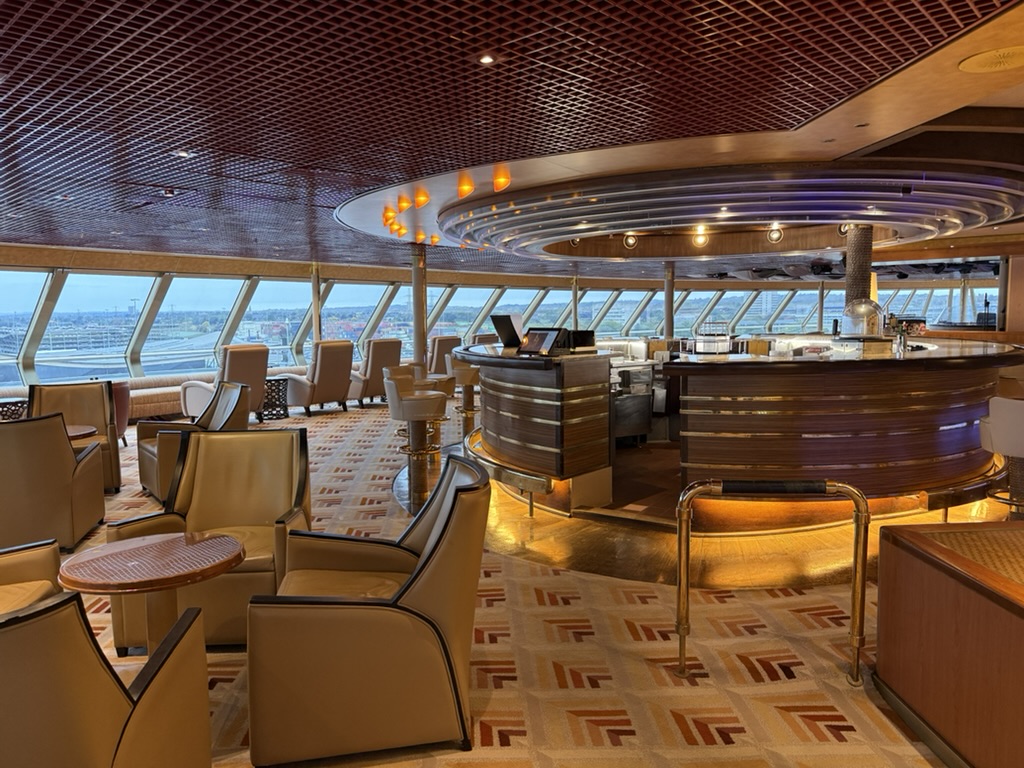
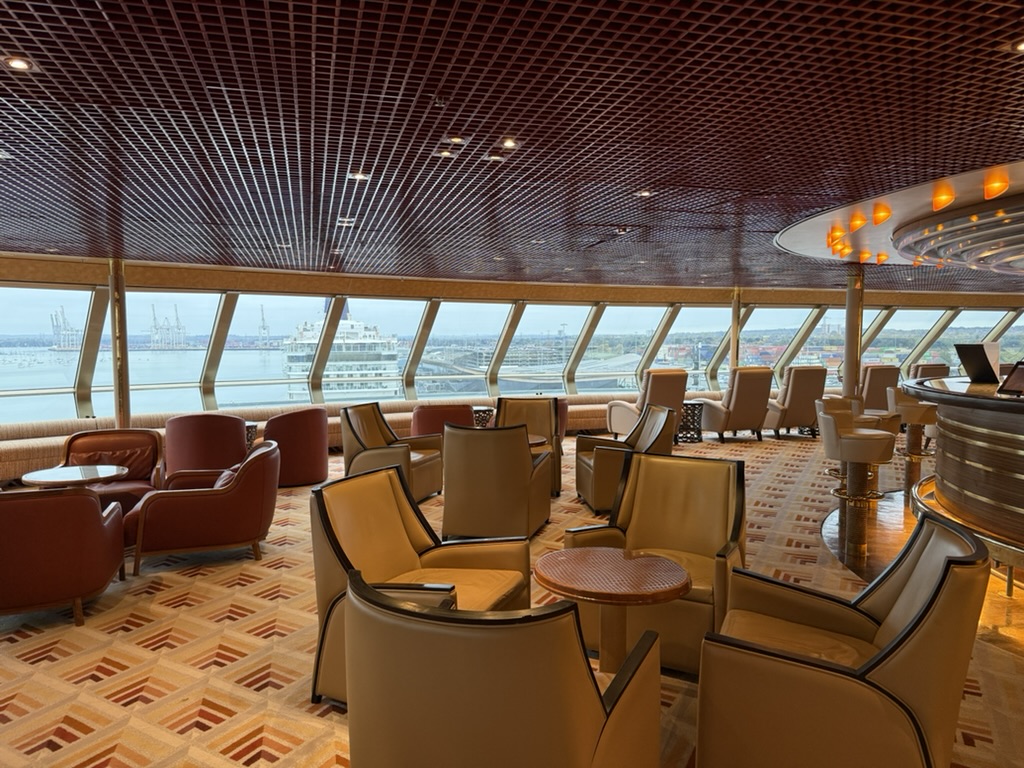


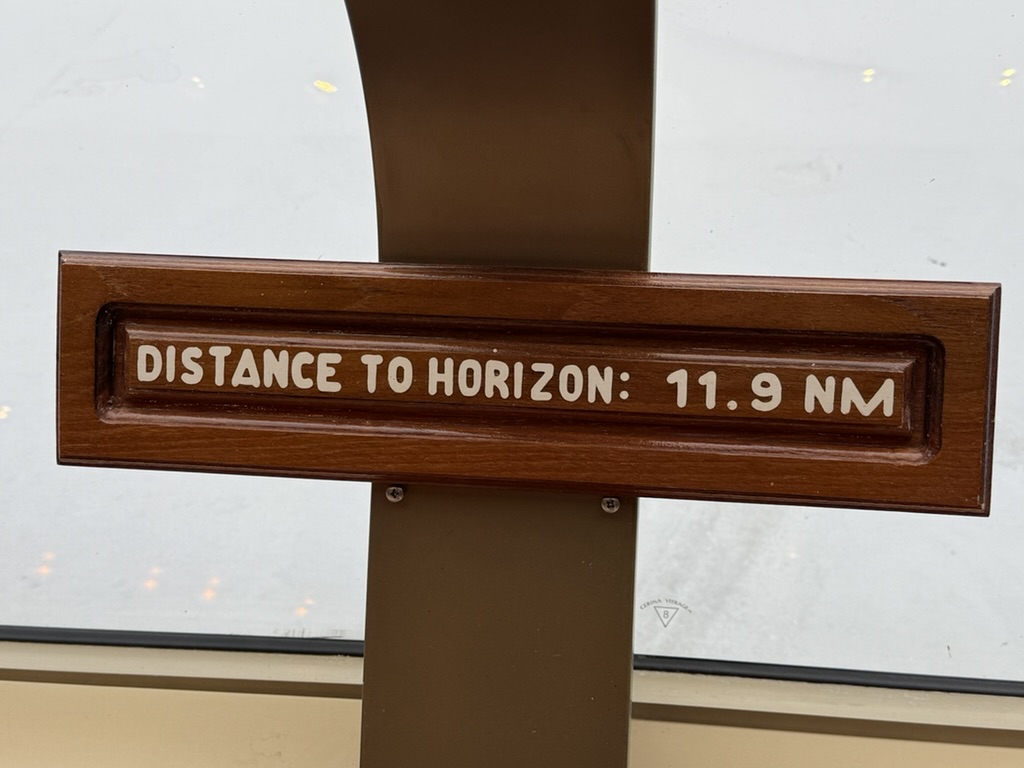

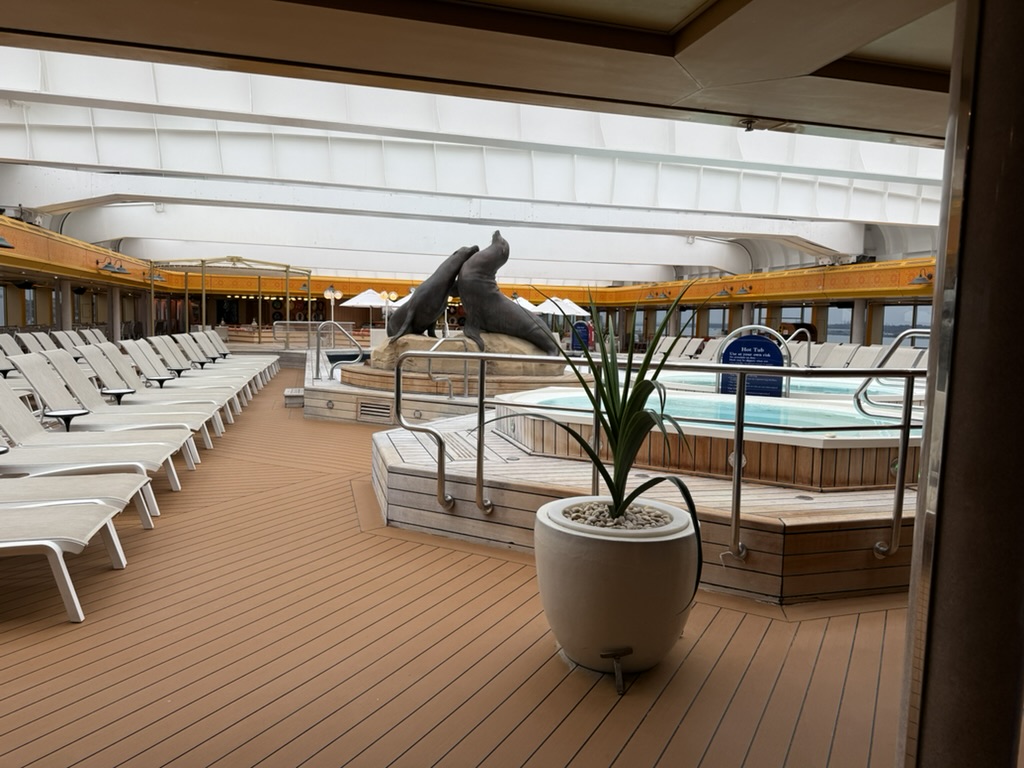

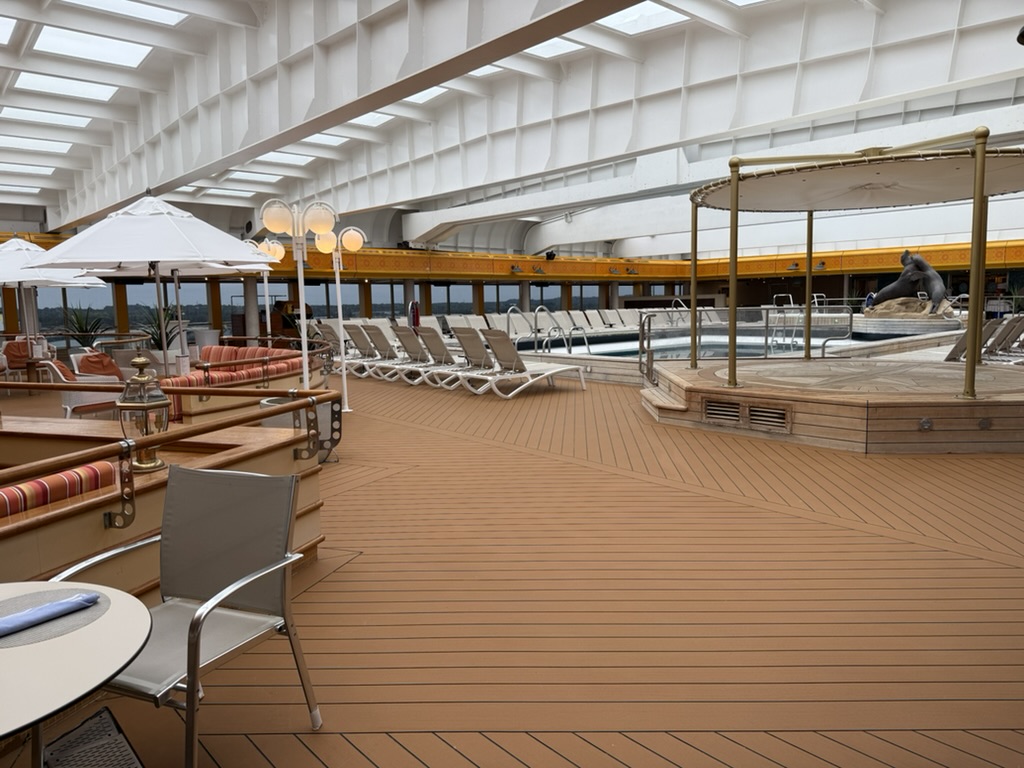
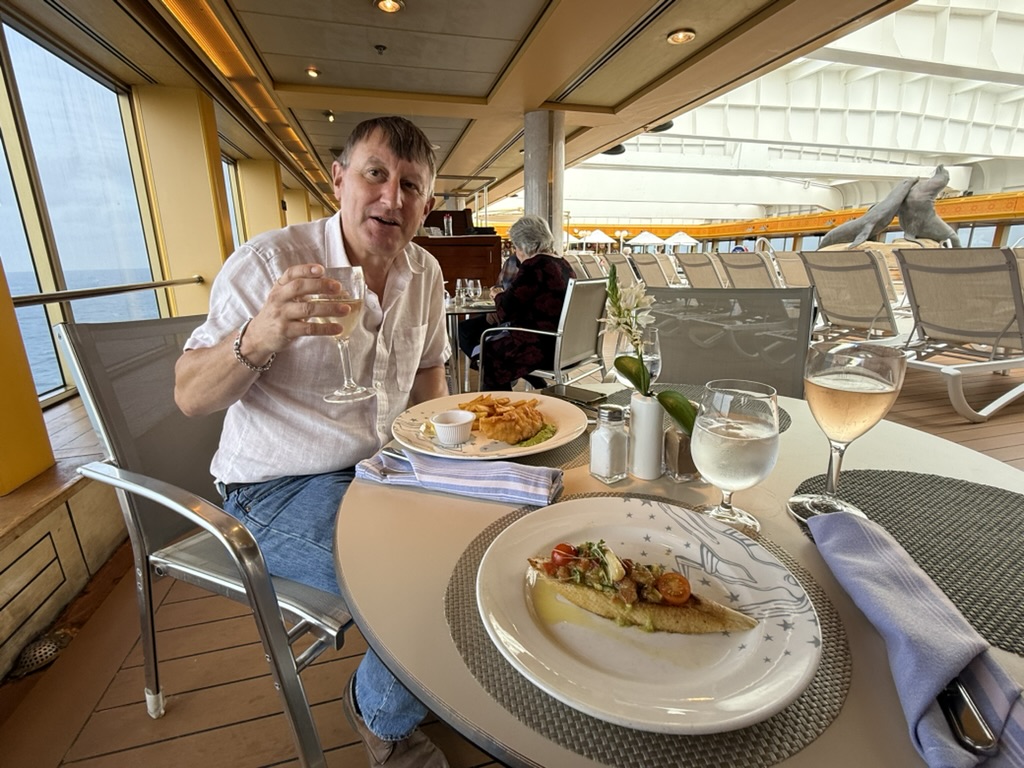
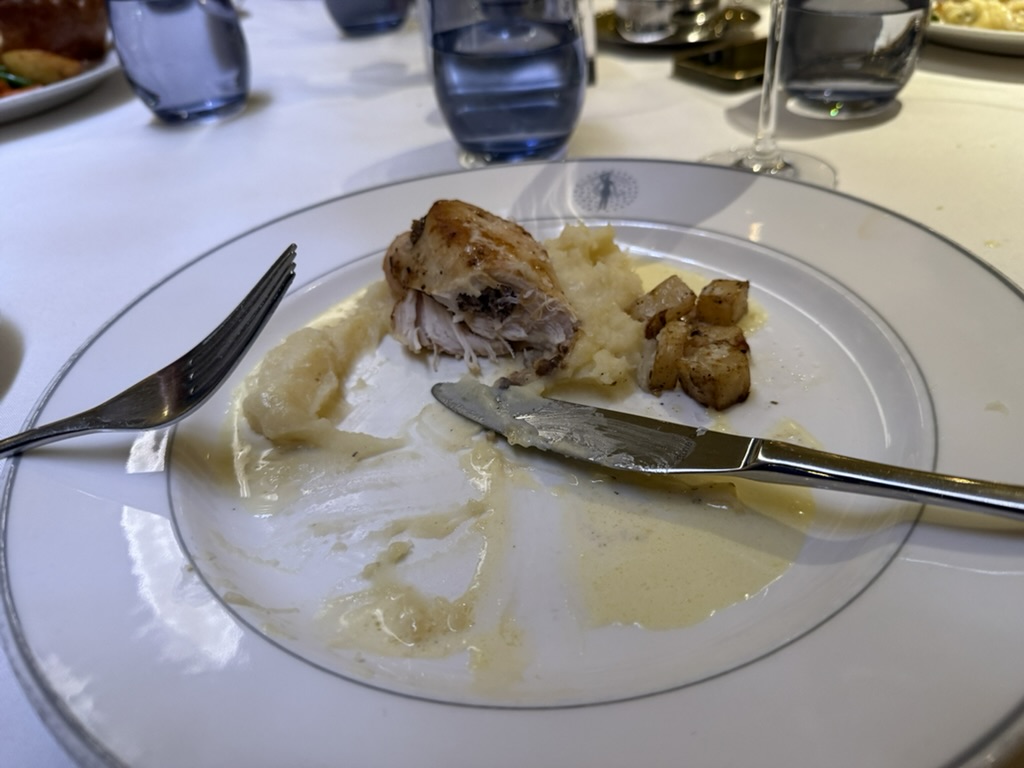
Believe it or not, the photos above are only a fraction of the areas of the ship. We didn’t get any photos of The View buffet area because the crew were busy preparing for the next lot of guests. We didn’t get any photos of The Lido Bar which is located on the rear of the ship on Deck 8 outside because, frankly, we forgot! We forgot the Oriental Tea Room too. There are also lots of relaxing areas where, unbelievably, there is no bar! If food is your thing there is food available 24 hours a day. Room service costs nothing and is a 24 hour service but the restaurants are open for breakfast, lunch and dinner. The View buffet is open for breakfast, closes for a very short period, then re-opens to serve mid-morning snacks before then serving lunch when it closes again to setup afternoon tea before preparing for dinner in the evening and then, finally the ‘midnight’ opening which is actually 11-12pm. The Pool Bar is open from 10am to 5pm, so there is literally always somewhere to get food. As many will know, I have certain dietary challenges (I am severely lactose intolerant and quite highly fructose intolerant) so food is a nightmare! Fred. Olsen ask that you inform them of any allergies or intolerances in advance of the cruise. When you arrive to embark (get me with the nautical terms, I’ll find a name for the pointy end soon!) there is a special desk setup that you go to and where you choose your meal for that evening’s dinner. This is because your meal will be prepared in a completely separate area and will be designed around your particular dietary needs and needs to be planned in advance of the main service. Once in your cabin the first thing you find is an invite to meat the Executive Chef the following morning. When you go to the meeting, he explains that they know everyone’s individual dietary requirements and they stress that you should not be restricted by any item on the menu – you can choose whatever you like and they will adapt the dish, if necessary, to your needs. In this regard, they really are fantastic! When the meal is served, the waiting staff very discretely just bring you your plate of food with the words “this one is for you” said very quietly. They really are very good. The food this time was as exceptional as it was on the previous cruise. My only slight gripe is that almost every evening meal was served with carrots and courgettes – I don’t desperately like carrots and I really don’t like courgettes! One other minor gripe is that when a dish should be spicy, it should be spicy. I mentioned previously the Vindaloo demonstration. One evening I ordered Butter Chicken for dinner. Butter Chicken is a dish that originates from Delhi and is something that I learned how to cook in India. It is a spicy dish (with very little butter!), not blow your head off spicy, but spicy nonetheless. It wasn’t spicy at all. So, when I ordered it during the second week I asked for it to be spicy – I explained that I wanted chilli and I wanted to taste it. When it arrived it was pretty much the same as it had been on the previous occasion but I guess they cook it in large batches so they can’t really change it that much. They did, however, give me a bowl of fresh chopped chilli which I added to it and that improved it.
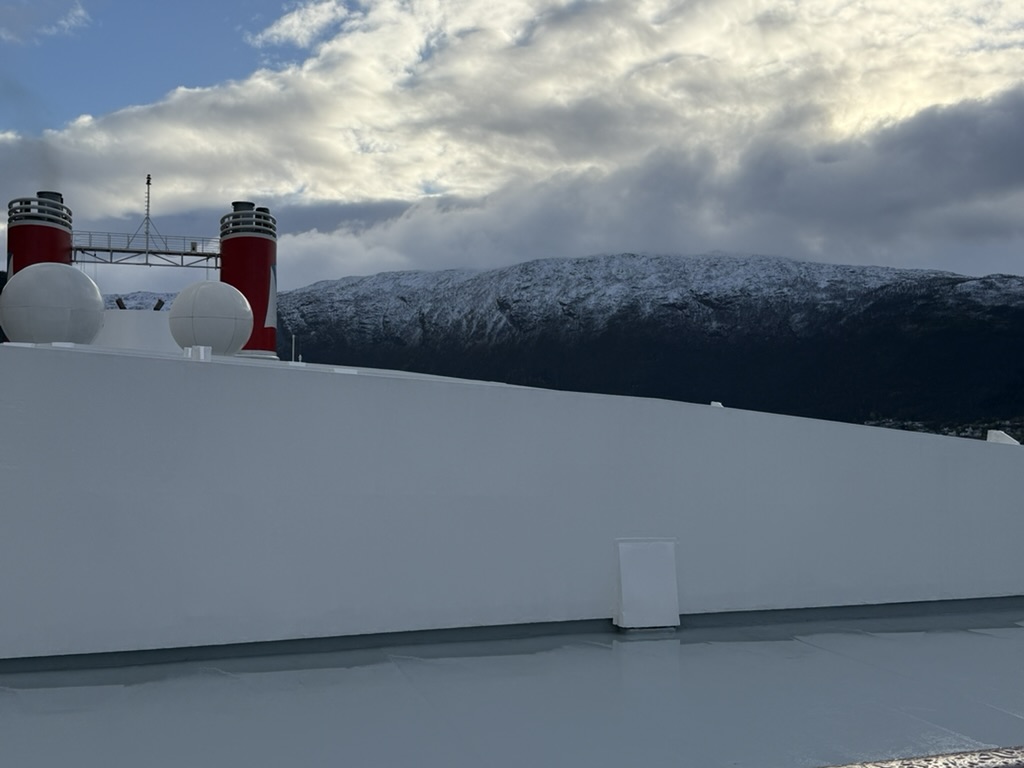
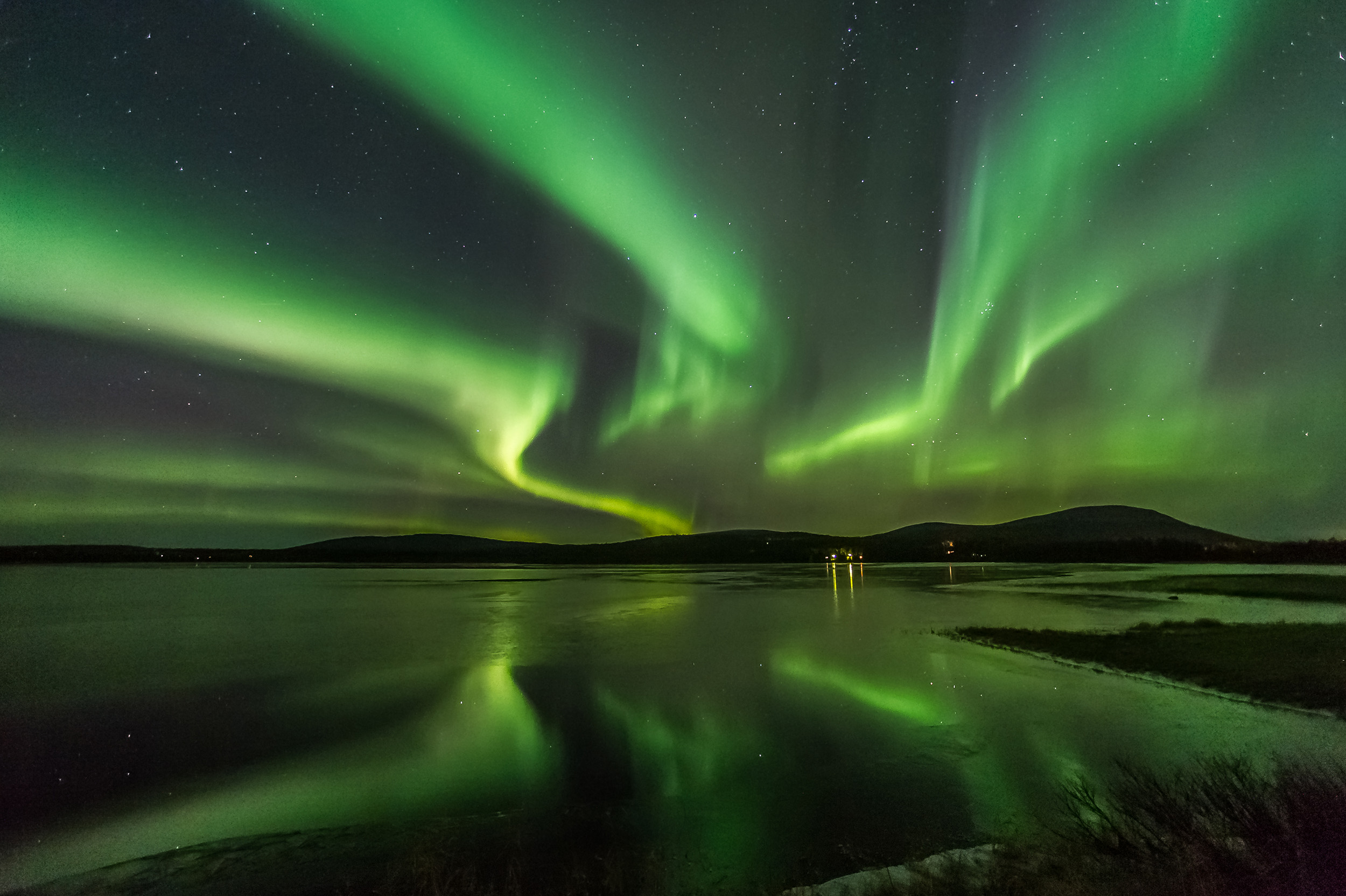
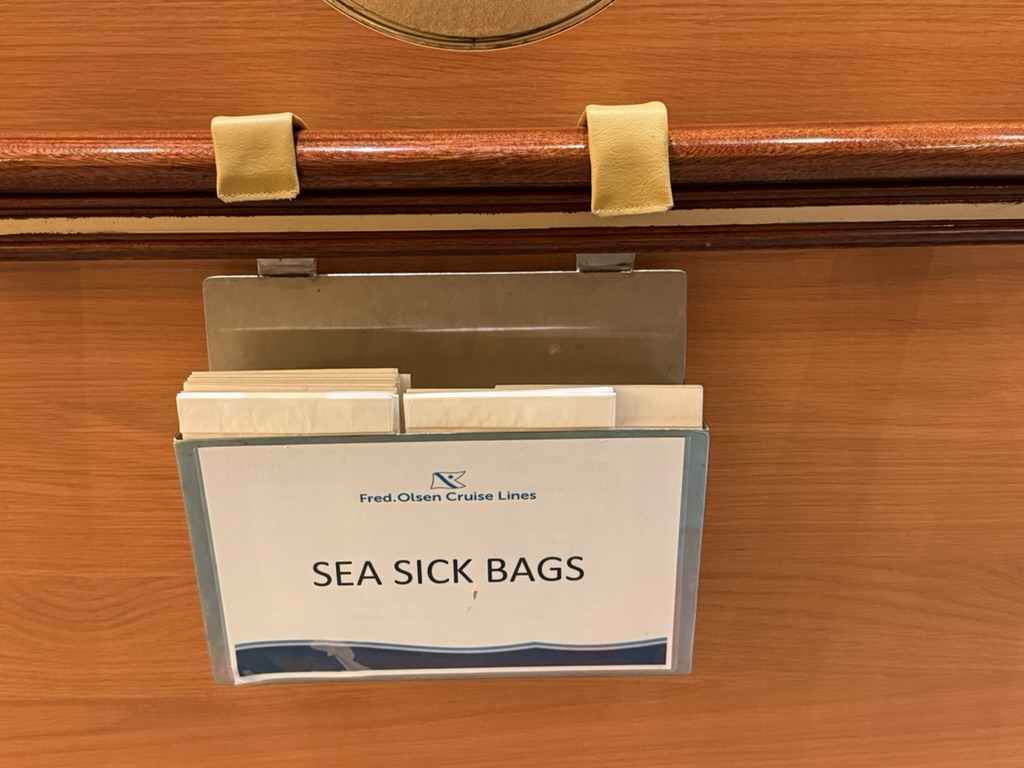
Sadly, we didn’t see any wales or dolphins on this cruise. Apparently they are often seen but decided not to put in an appearance during our trip! We did, however, see the Northern Lights. Not just those people who went on the excursion to see them. In fact, they didn’t see them on the excursion but they showed up in the night sky on the first night of cruising back to Stavanger. Unfortunately we didn’t get a decent photo of them because I had become decidedly unwell. It is quite unbelievable that I had survived a Force 9 in the Bay of Biscay but I now became quite unwell with a much smaller swell on the sea on the way back from the Arctic Circle. The sick bags had been put out though, so it was obviously anticipated that some passengers might become ill. I felt very nauseous and very, very unwell. I realise now that I had not experienced sea sickness previously but I certainly was now! For the next 26 hours until we reached Stavanger I felt very, very ill. The sea sickness tablets I had taken with me, just in case, were doing absolutely nothing. I wasn’t the only one. Several people, including a lady called Stella we had met and were friendly with on board, were feeling exceedingly unwell. In the evening before we arrived in Stavanger she told me that she had been able to buy some sea sickness tablets from Guest Services and she was feeling much better. I resolved that if I wasn’t feeling better in the morning I would go and see if I could get some too. The following morning I was feeling, if anything, worse. Captain Clarke and I left the ship briefly to look at the town of Stavanger to see if it was suitable for the ‘speed machine’ as we had been told the old town was all steps and cobbles. It is. We returned to the ship within about 30 minutes and went straight to Guest Services. We asked the question we really didn’t want to ask … do the sea sickness tables contain lactose? Of course they do!!! So, a call was made to the ship’s medics and I was advised to go and pay them a visit. A visit to the medic usually costs around £115 just for the appointment, so I wasn’t too keen but I felt so ill that we decided just to go. When we got to the medic he looked up the lactose content and discovered that both the tablets they had on board contained lactose. There was an injection I could have but it would take about 24 hours to work. I wasn’t too keen on waiting another 24 hours and the medic said he would have a word with the ship’s Doctor. He came back and explained that in one of the tablets the lactose was synthetic (it is apparently used to help you absorb the drug) so it should have no effect on me. I decided to take the chance. I procured the tablets for the princely sum of £4.50 (the currency on board is all GBP) and took the two recommended almost immediately. The packet instructions said that you should take no more than 1 tablet every 8 hours but the doctor had said take two tablets first and then one after each 8 hours. 2 hours later, I felt right as rain and we went off ship again to take Captain Clarke’s parents around the town of Stavanger. So, if you are ever at risk of, or think you could be, getting sea sickness I can thoroughly recommend Stugeron 15 – they are very effective and are what is given to the crew if they get sea sick!

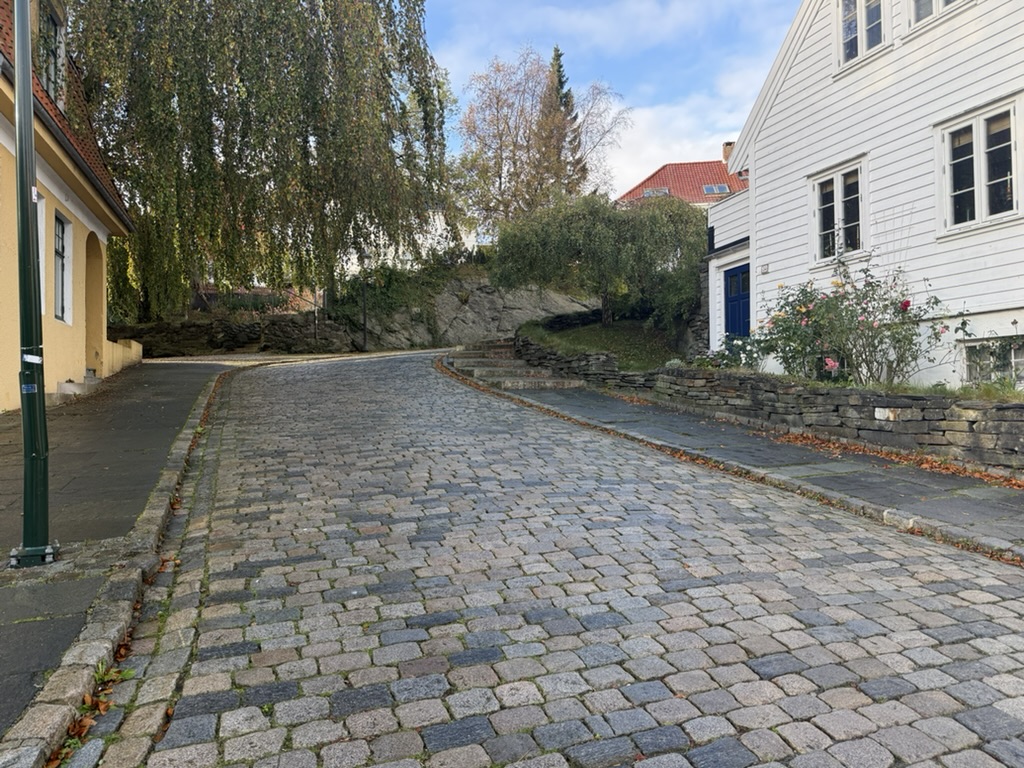
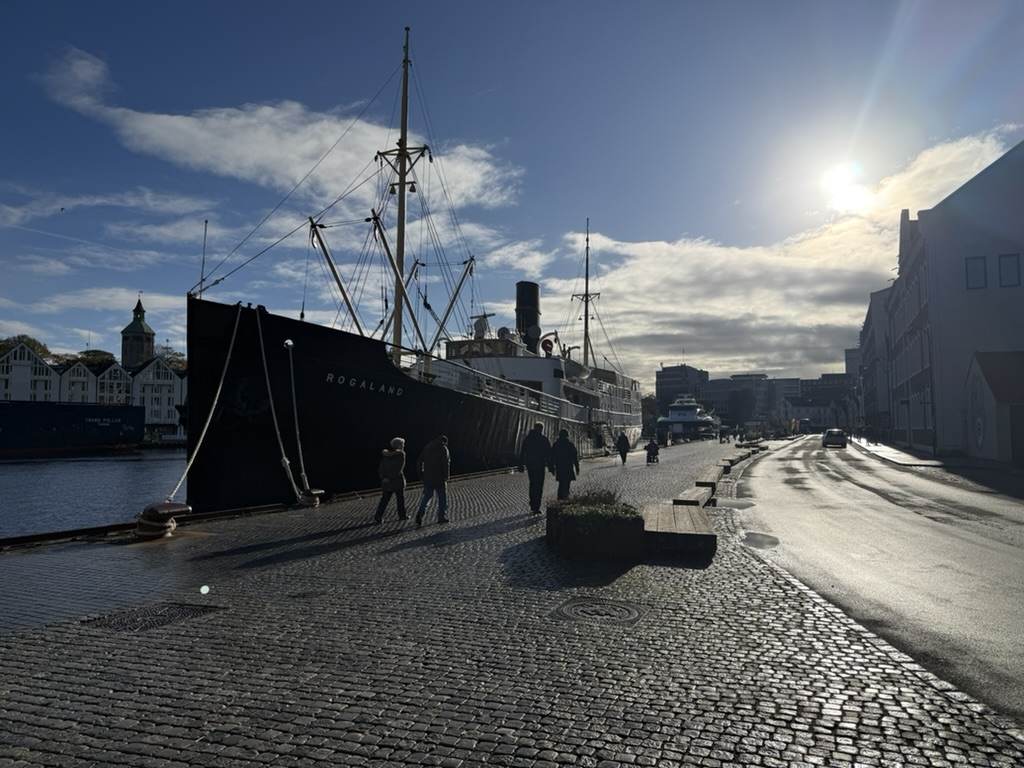
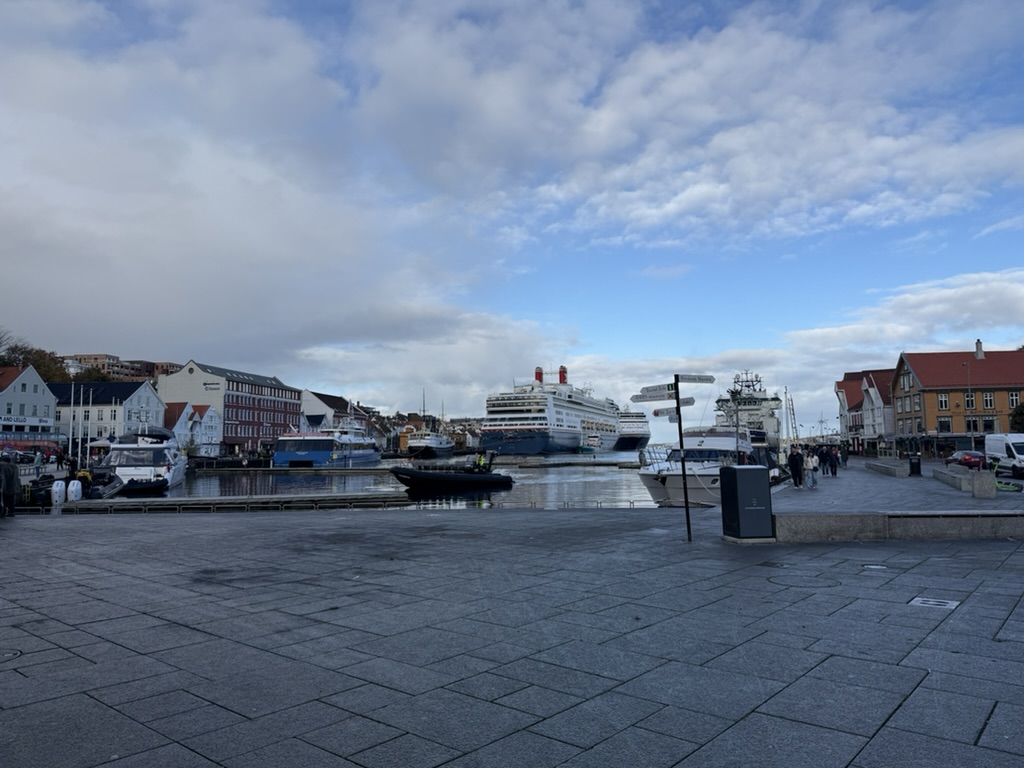
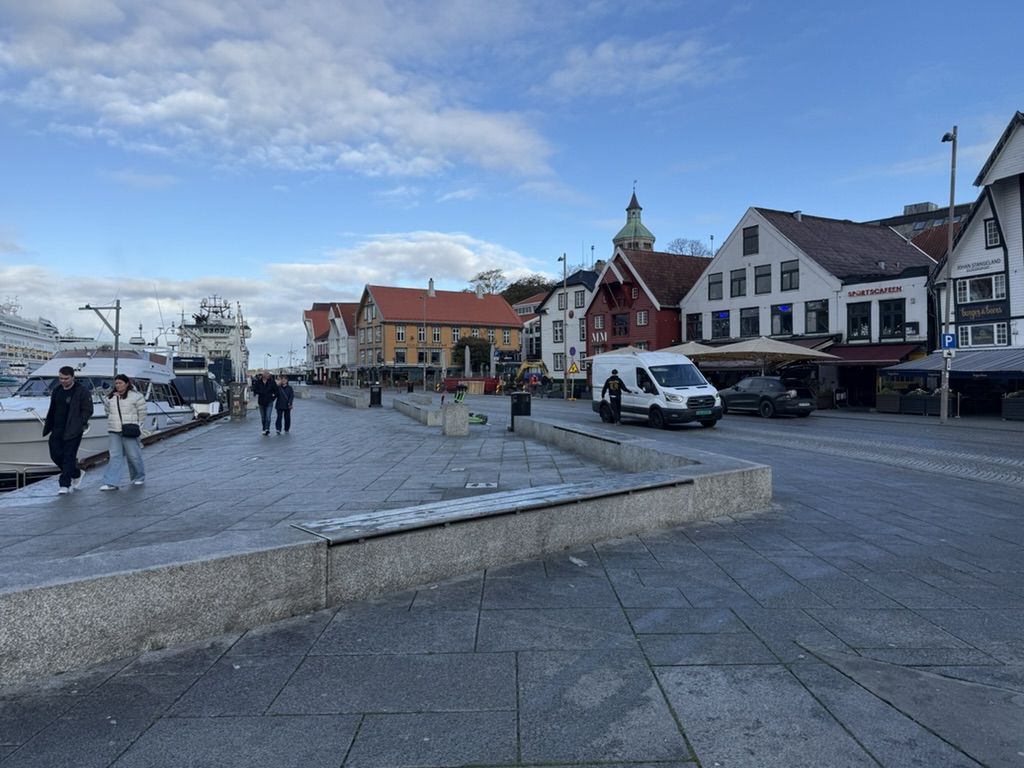


The old town of Stavanger was unsuitable for the speed machine but the newer parts of the town are fully accessible. We all went out for a walk around (I was feeling much better by this time) and looked at the shops and restaurants around the port. The ship almost literally docks in the town! It is so accessible because the town is just 200 metres from where the ship docks. Everywhere you look around the town there are electric scooters just parked, randomly it seems. The electric scooters can be hired via an app and first time users get the first 30 minutes free (I got Google to translate the writing on the scooters). It didn’t say how much they were to hire but I suspect that they must be pretty reasonable as there were more people travelling around the town on these than there were cars! At one point a van turned up to what appeared to be a randomly parked scooter, the chap got out, changed a battery and then jumped back in his van and drove off. They must have some kind of system in them that reports the state of the battery and their exact location. Very clever! A huge proportion of the cars in Norway are fully electric. This will be due to the price of electricity being so low. Norway benefits from a huge amount of hydroelectric power and some geothermal power in the north. This combined with the wind power that is generated means two significant things; 1) Norway uses almost none of the oil it extracts (with Stavanger being the on-shore capital of the Norwegian oil industry) and, 2) the resulting costs of power is significantly lower than almost anywhere else in Europe. To put this in context, electricity costs in the UK (including taxes and levies) are approximately 34 cents (Euro cents) per kilowatt hour, in Norway this same cost by direct comparison is 13 cents (Euro cents) per kilowatt hour – UK electricity prices are 2.6 times higher than they are in Norway. It is vastly cheaper to charge an electric car in Norway and yet, here in the UK, we regard charging an electric car as cheap!
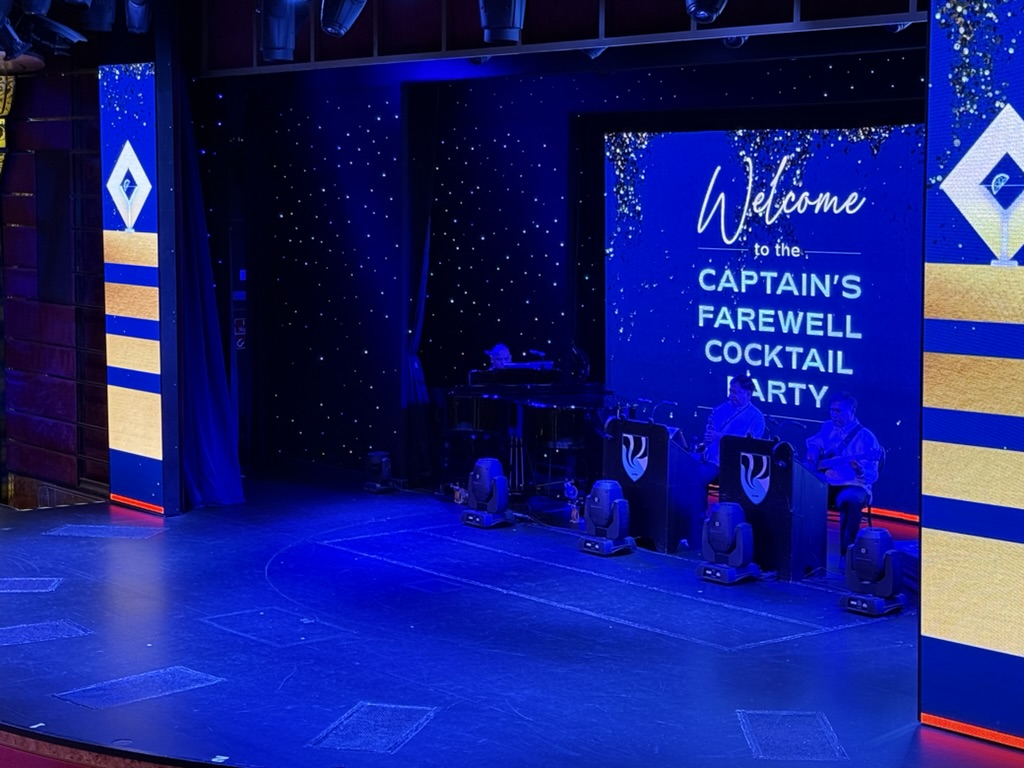
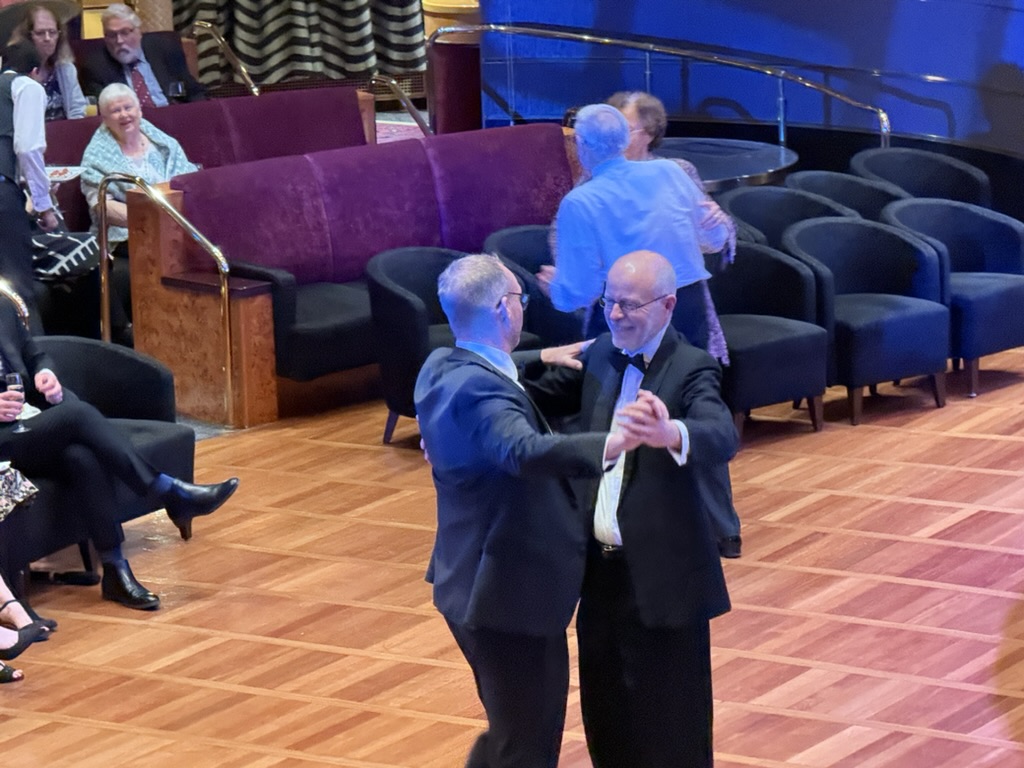


And so, as I bring my missives from this trip to a close, there are a couple more things I want to share about the Borealis. Firstly, the Captain’s update. Every day at 12:00 Captain Mikael Degerlund gives his update. He comes over the PA system and tells the passengers the time and date, our current speed, the time of arrival at the next port, the weather forecast for the next 24 hours, the current and expected sea conditions, and a little about our destination port. He always concludes with asking passengers to wash their hands regularly and pointing out that the hand sanitiser stations around the ship are to be used in addition to, and not instead of, hand washing. He always finishes with, “Thank you and take good care of each other”, which he says very slowly with a thick Finnish accent. It always makes everyone smile. When we were on the Bridge (more of that in a minute) he did his 12:00 update, switched off the PA and turned to us smiling and said in a perfectly good accent, “Well, that’s another one done!”.
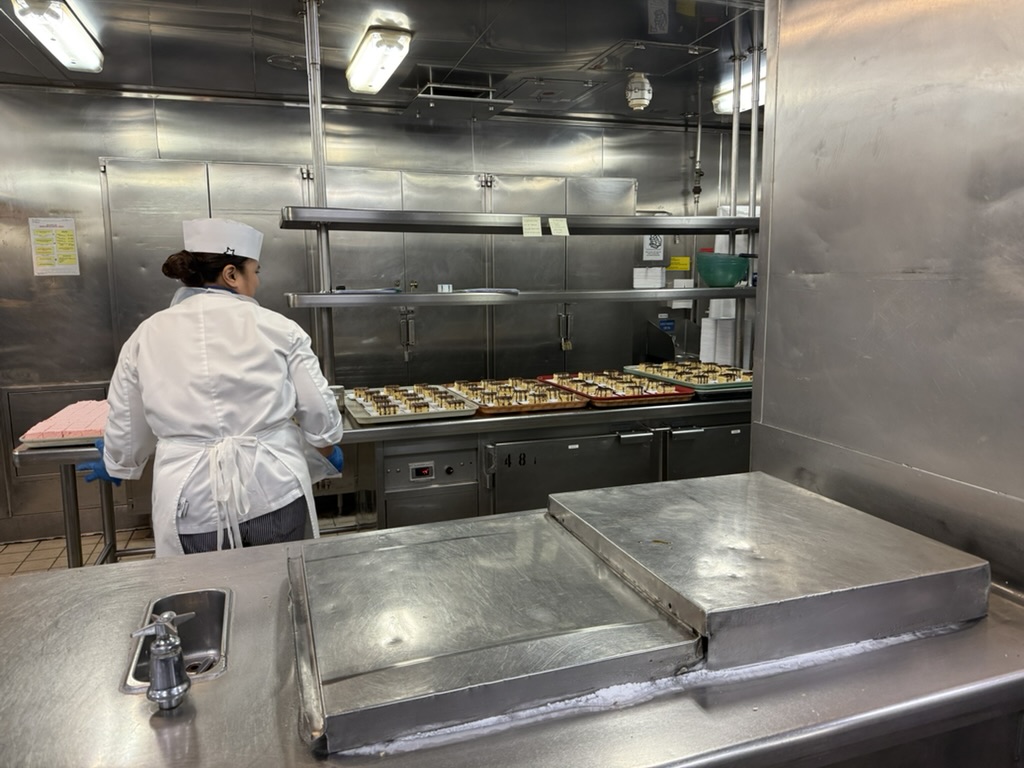
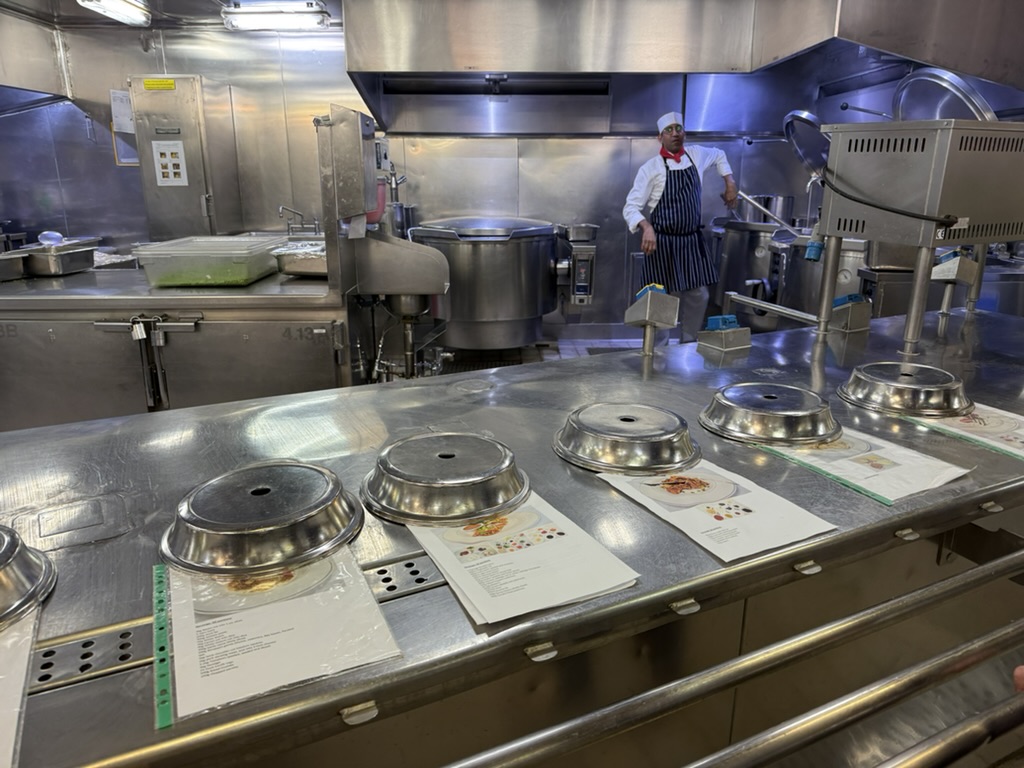
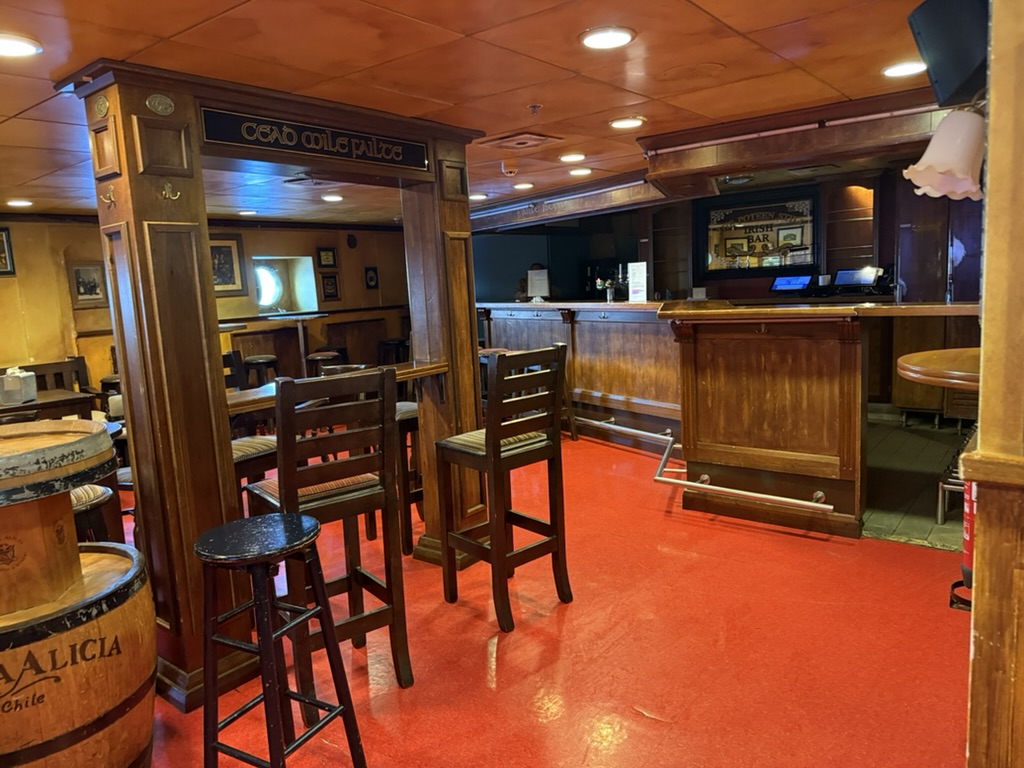
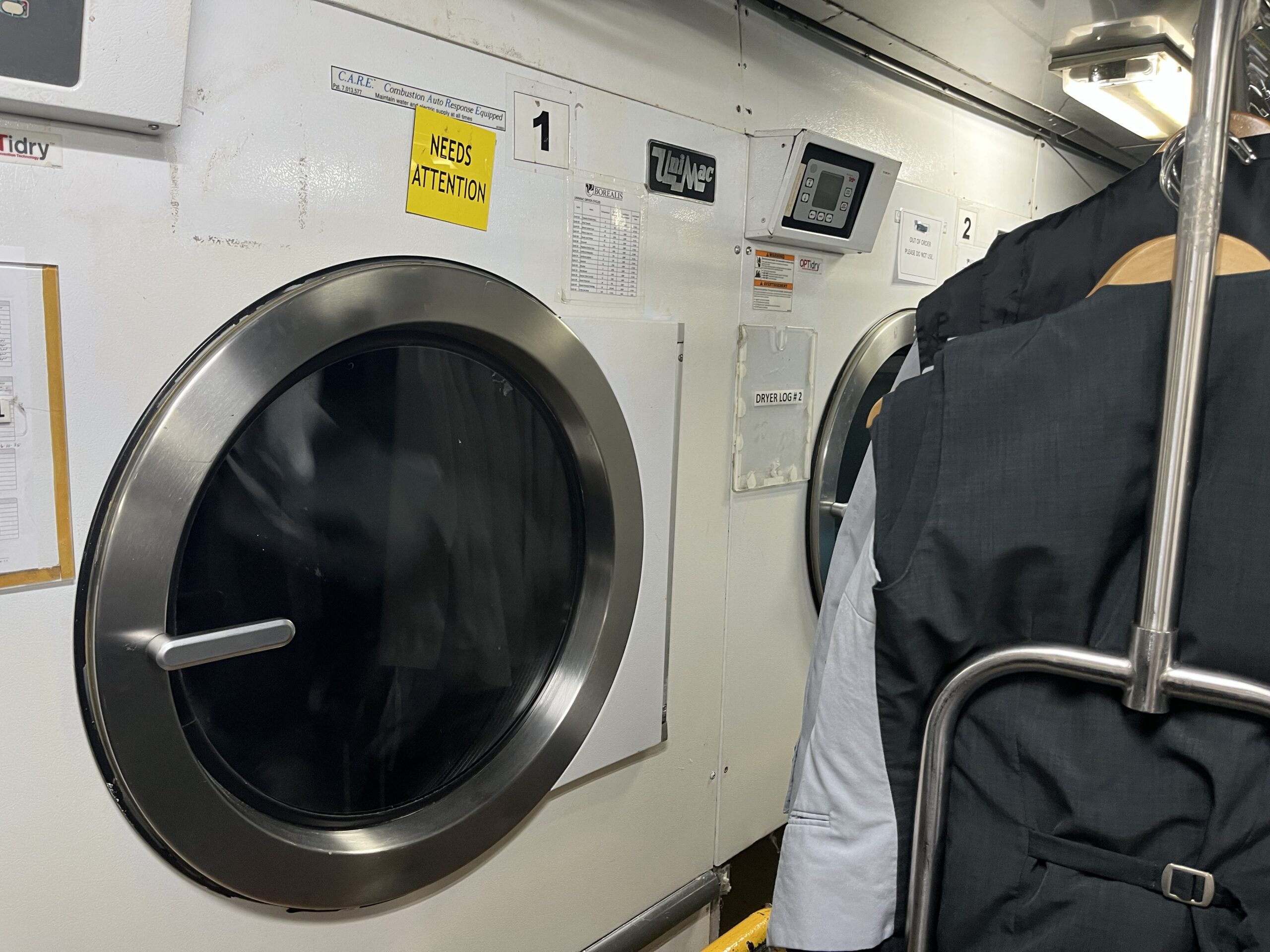
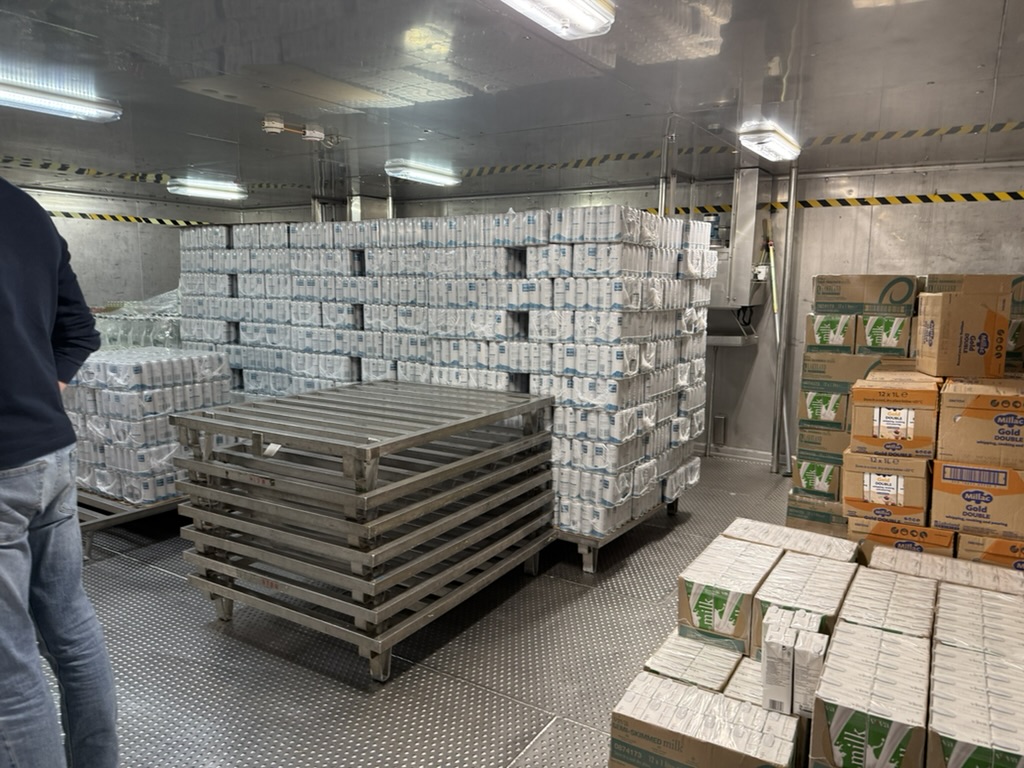
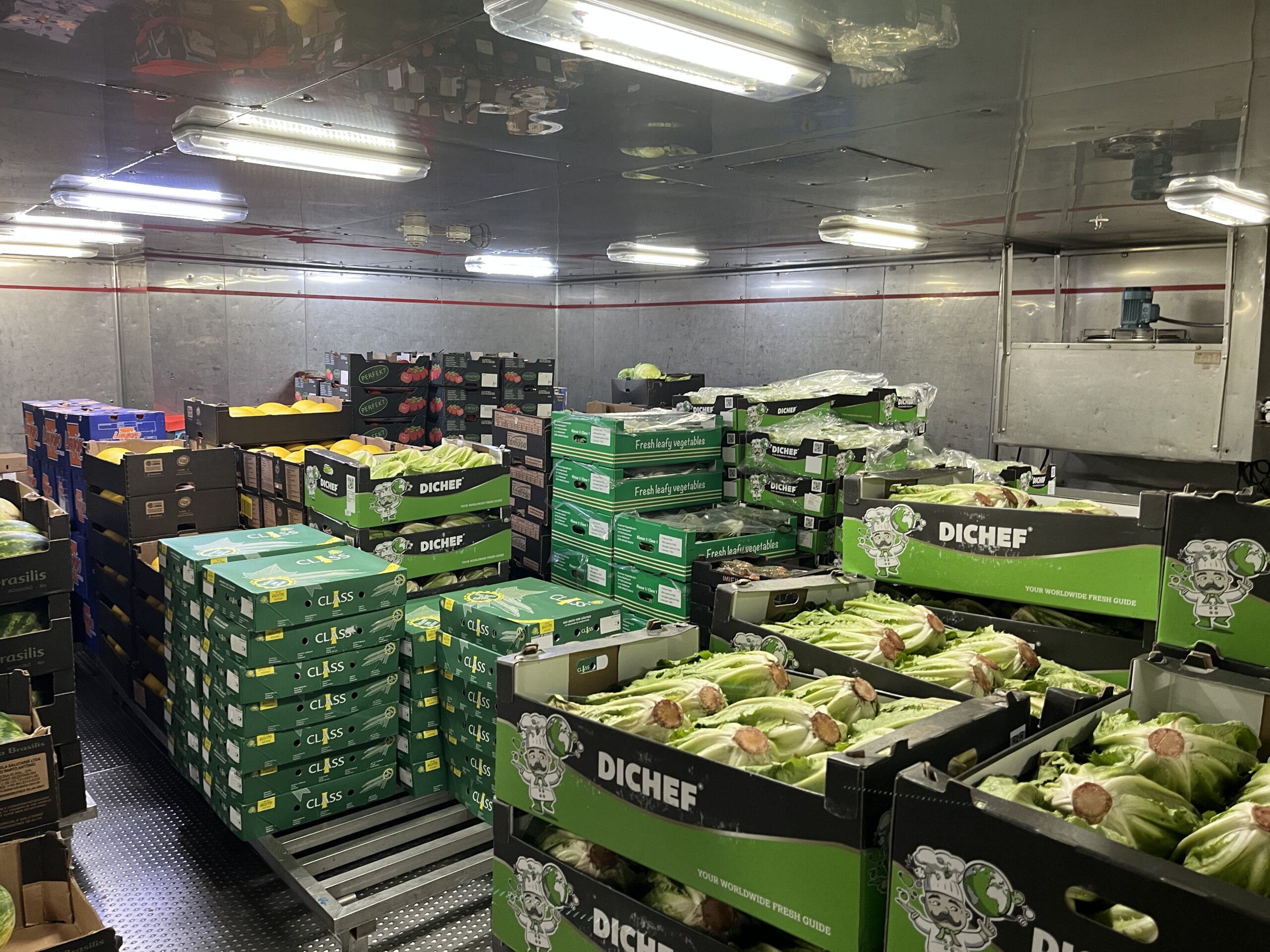
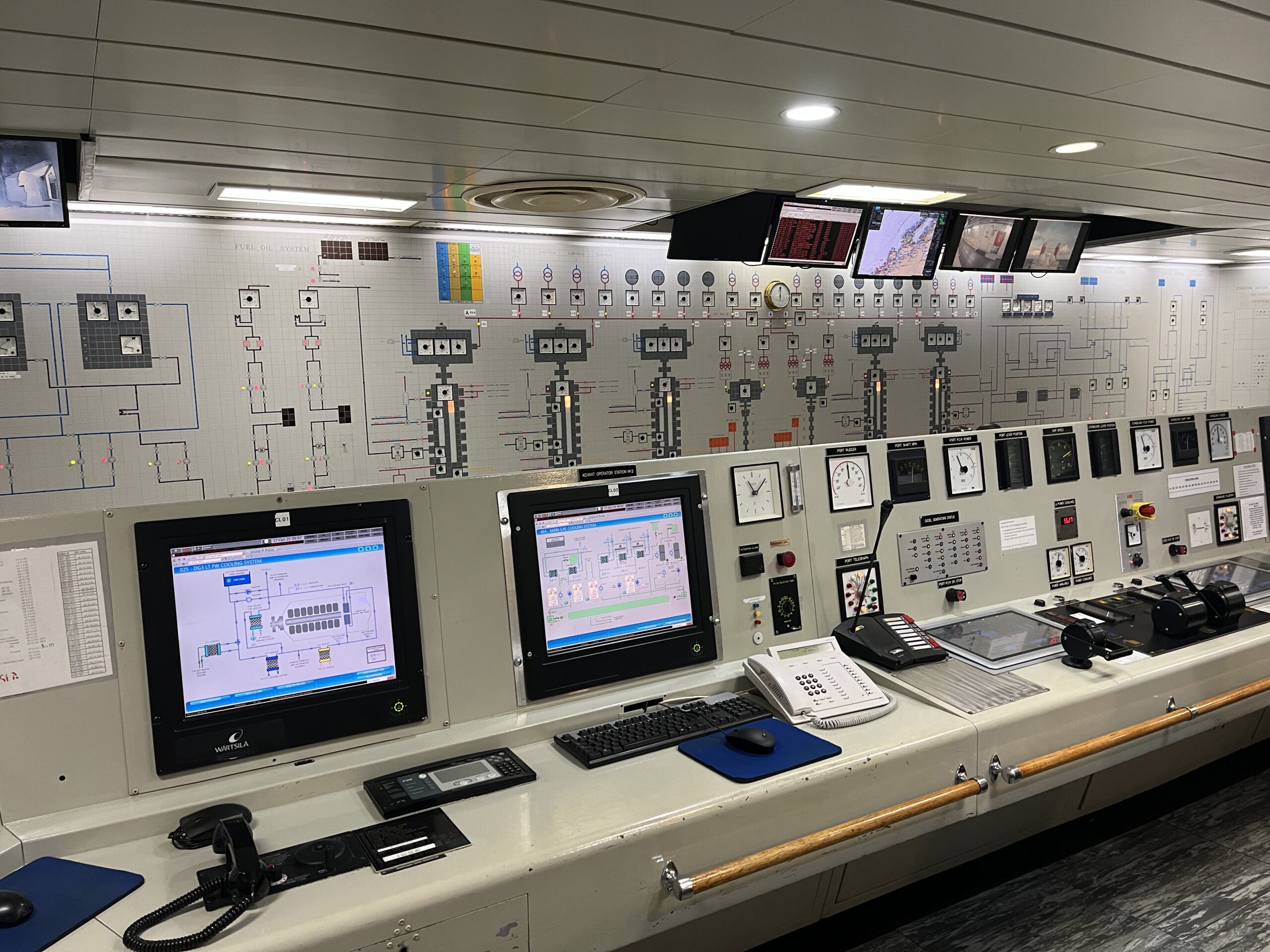
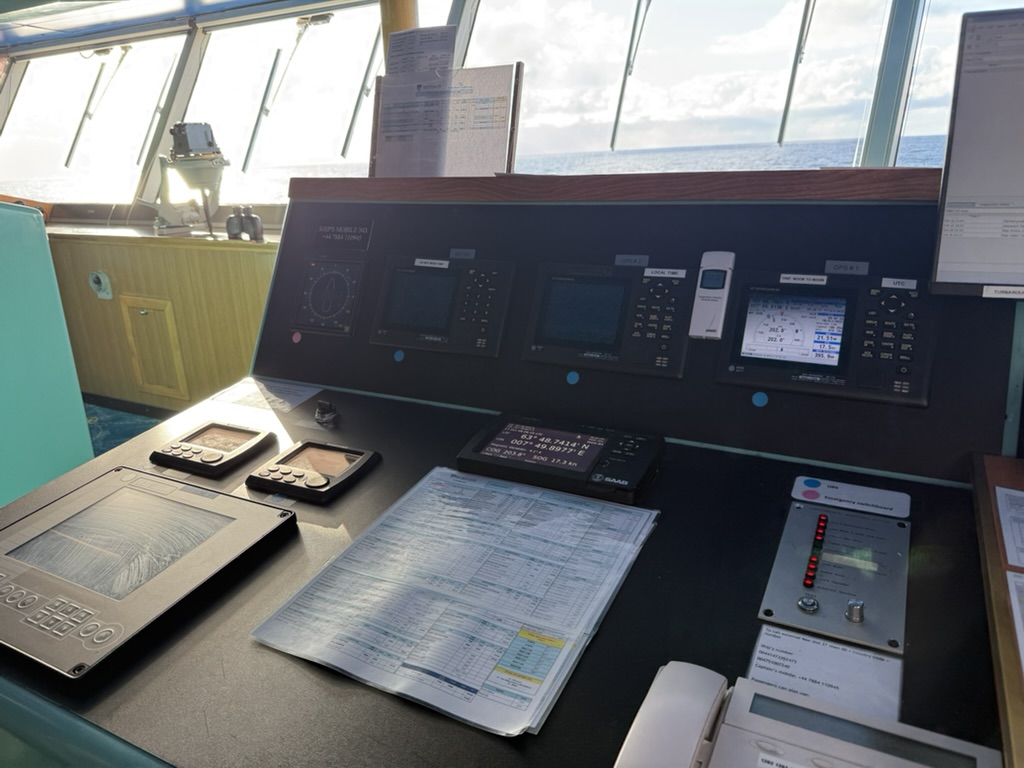
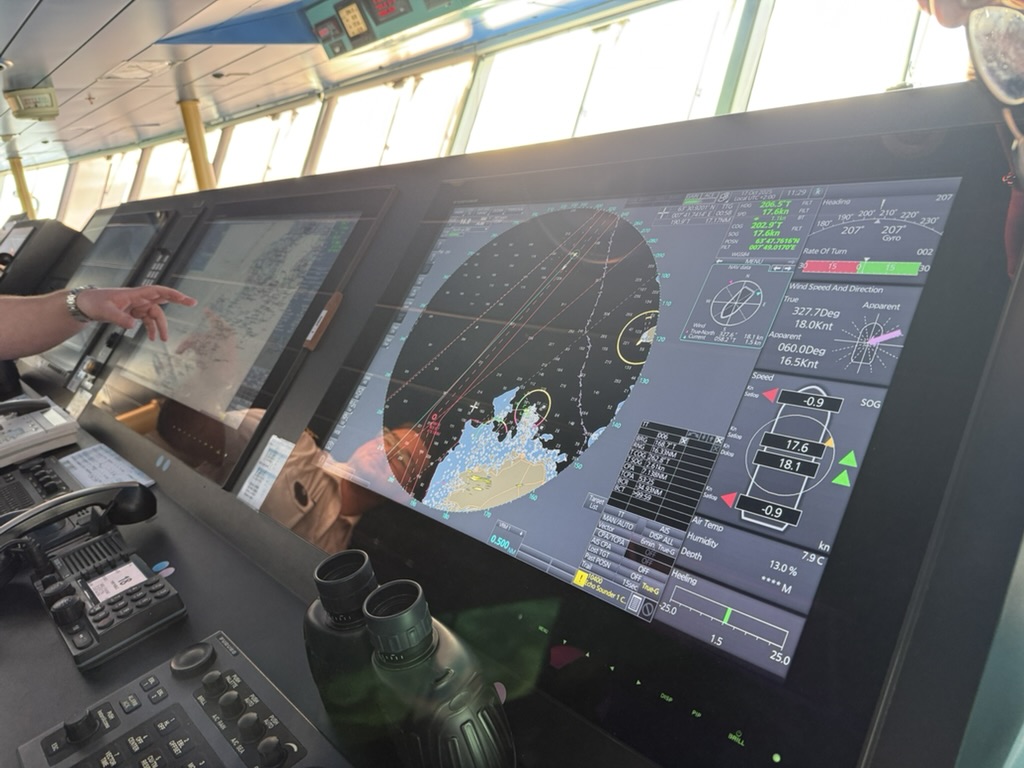
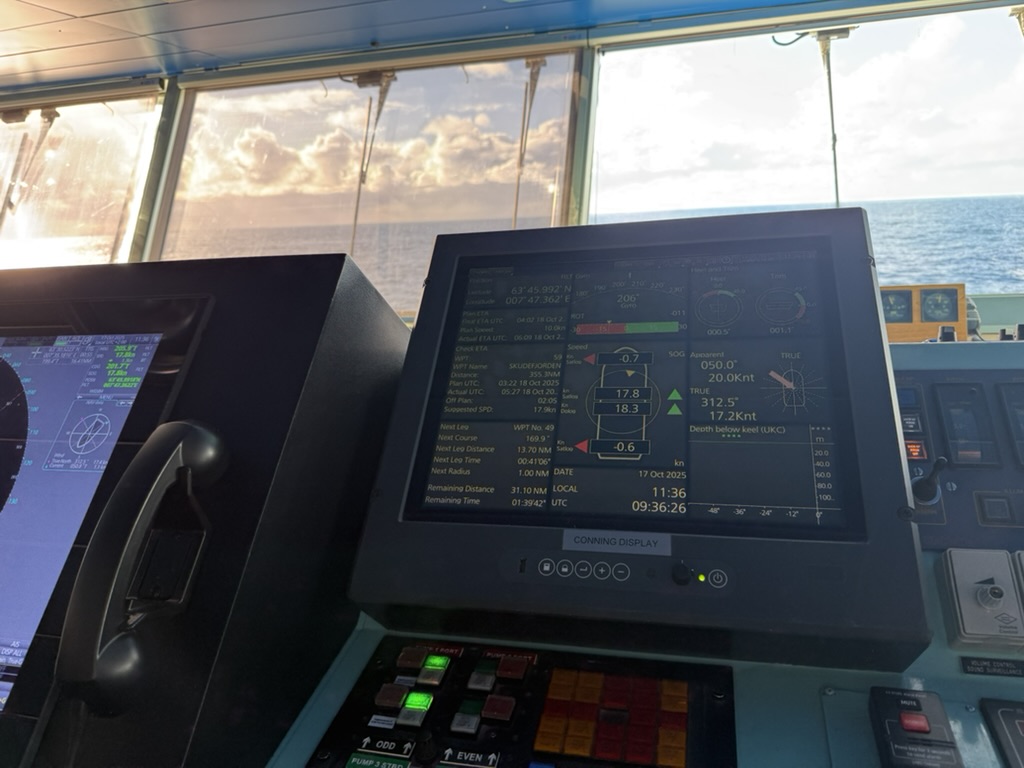
So, you may ask, what on earth were we doing on the Bridge? Whilst I could suggest that someone had to tell them how to drive the thing, I am pretty sure you would doubt that! Actually we had booked the ‘Behind the Scenes’ tour. This tour sells out very quickly and I actually booked it three months ago. They can only accommodate 12 people and it is very popular. So, at the appointed time we all assembled in the Earth Room (remember that?) and awaited the start of the tour. Along came Amy and Milly, a couple of dancers from the Borealis Theatre Company who were to be our guides around the ship. Our first stop was the kitchens (or galleys if you are a nautical man like me!). They are spotless and manned 24 hours a day with just two shifts. There are 81 chefs in total. The ship has approximately 1,200 passengers and 650 crew. Dinner is served over two sittings but all other meals and catering are done as required. There are 4 bakers who bake over 4,800 buns and other breads every day! It is an incredibly well run machine. The crew mess which serves 650 crew (although some front of house staff and entertainers are allowed to eat in the passenger restaurants) is catered for by just 4 chefs who cook a mix of mainly Thai, Indonesian and Filipino food. I must say that I wouldn’t have minded a bit of that! We then visited the crew deck. Although not normally part of the tour we did poke our heads into the crew mess (no photos there were crew eating in there) and the crew bar (which I did sneak a photo in). The crew bar is open to all crew and heavily subsidised but there are very strict alcohol rules for staff, who are regularly breathalysed. For some there are the same limits as for driving here in the UK, for others there is a strict no alcohol ban. Next was the laundry room which was very hot indeed. Next we went to the storerooms (the walk-in fridge was flipping cold!) and then to the Engine Control Room where the ships Chief Engineer controls the engines that are two decks below us. For health and safety reasons we weren’t able to visit the engine rooms but since it would have been very hot, noisy and dirty, I am not sure we would have got much out of that. Finally it was up to the Bridge to see how the ship is ‘driven’. The Captain wasn’t there when we got there because he was in the Auditorium giving a talk about how he became a Captain (he started his life at sea as a deck hand on the Ramsgate to Dunkirk car ferries!). We were welcomed by Calum who was a Second Officer (I use the word was because he resigned the next day to take a job in Aberdeen in the port – I don’t think it was anything to do with us!). Calum explained how the Bridge is operated, how they don’t just drive the ship but they manage the reverse osmosis that is used to effectively make water. They can make an impressive 40 tonnes of water an hour! All water on board is made using reverse osmosis including drinking water, sanitary water, shower water and the water that is used as ballast to keep the ship as steady as possible. The ship has two huge stabilisers but does not always use both. In fact, during our visit only one was in use. Apparently to have put other stabiliser out would have had the effect of de-stabilising the ship!! The Captain returned from giving his talk, made his 12 o’clock announcement and then we had a photo taken with him. He then spent the next half an hour chatting to us and answering questions that he had probably been asked 1,000 times before, but he did it with humour and patience. Those paying attention at this point (if I haven’t bored you to death) will notice that Captain Clarke is not in the photo with the Captain. This is because he had just nipped to the loo and everything is timed to the minute, so it couldn’t wait for him to come back. The story he would prefer me to tell you is that he took the photo!! In the not too distant future I might just pop someone out of the photo and drop Captain Clarke in – after all, we will almost certainly never meet any of the others again and he was there!








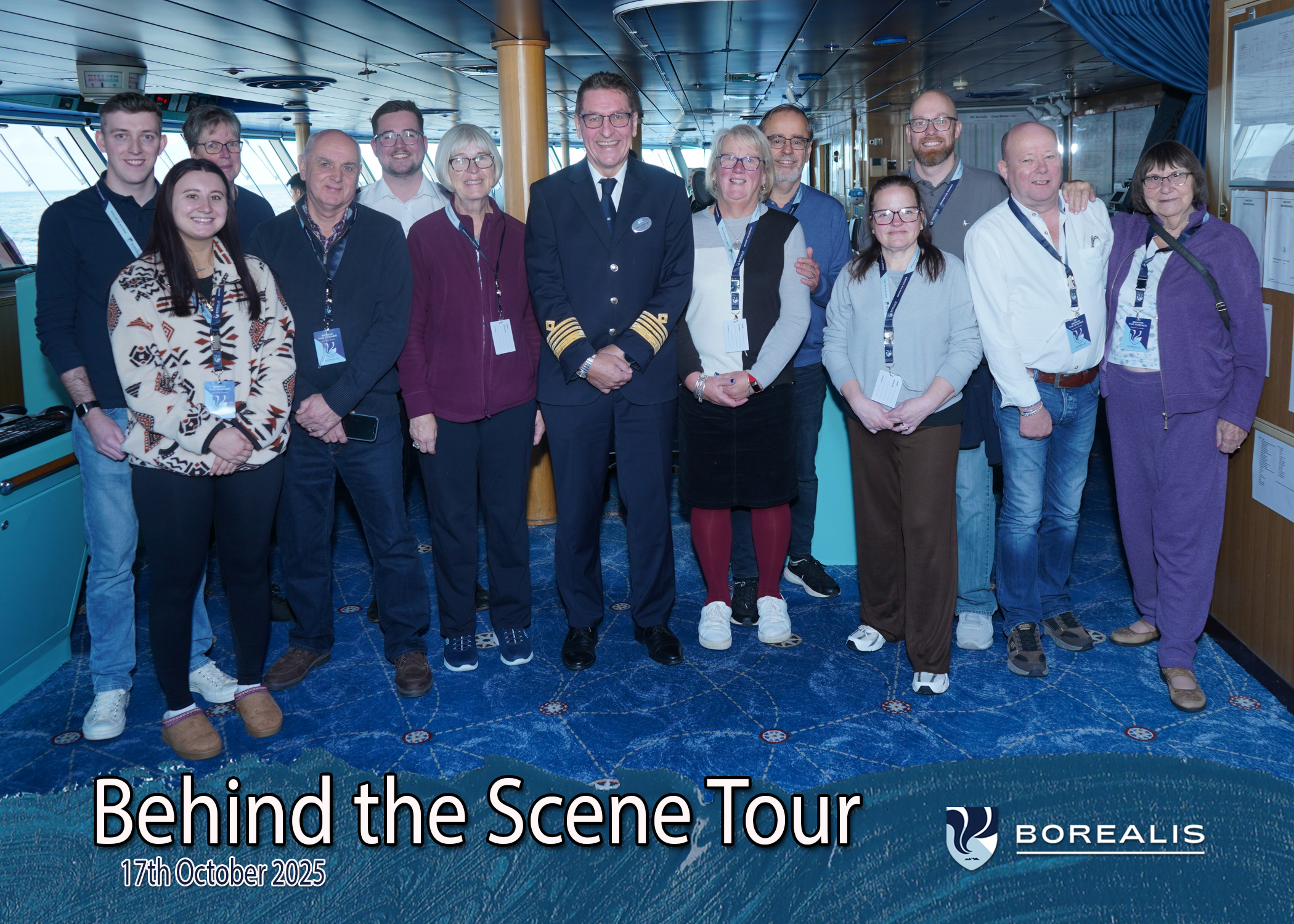
So that, is my missive from this cruise complete. I suppose I should mention that we had a mere Force 5 storm coming back across the North Sea but with the help of Stugeron 15 and the fact that we had got used to being on the ship by now, the only real effect was that we were given plastic glasses in the Pool Restaurant when we were having lunch because of the risk of ‘sudden movements when at open sea’! We met a lot of people, had a lot of laughs and had a few frustrations along the way but, overall, it was a good trip. I am reminded of the priceless Julian and Sandy sketch from Round the Horne (if you don’t know it, it is worth Googling) when they were working for ‘Bona Cruises’ and telling “That nice Mr Horne” about it. I am somewhat summarising it here but it goes something like this;
[Julian] “Well, we were at sea for days, I mean days! Ere,1isten: `Eighth day – still no land to be vada’d anywhere. Rations low – down to last tins of paté. Twelfth day – no food. Sand raving. Fourteenth day – I went overboard.”
[Sandy] “Oh, it was terrible, Mr. Horne. A gale blowing and me hanging on to me jib for dear life – spray dashing in me eek – salt caking my eyelashes. Suddenly I become aware Jules is screaming. I look – and there he is in the water. I shouted `Ome overboard!”
[Horne] “What did you do?”
[Sandy] “I summoned up me last resources, stiffened up me sinews – “
[Julian] “They do go limp in the water.”
[Horne] “But did you manage to drag yourself up on deck?”
[Julian] “No, we wore casuals …”
And so it goes on. If you haven’t heard the full sketch I am sure it is available somewhere on the internet. And you can definitely Google the Polari which was the language that they used to cover up what they were saying. If the BBC had known at the time what they were saying, they would never have broadcast it! People found it so funny because it was Kenneth Williams and Hugh Paddick at their very highest camp and it didn’t really matter that the majority of the audience didn’t understand what they were saying!
And so, finally, it was a good trip. I think we might need a bit of a rest from cruising for a while. I need to get some sea legs back from somewhere and Captain Clarke needs a rest after talking to all those people. Once final note about people – we were in the laundry getting some shirts washed (we were at sea for 18 days) and another couple walked in. Captain Clarke introduced himself and started chatting to them. Eventually, the question that always comes up arose “Where are you from?” Says Captain Clarke. “Eastbourne” They said. “Oh really! We live in Pevensey” Says Captain Clarke. “Well, actually we live in Langney”, they said. It turns out that they live about half a mile down the road! It’s a funny old world …

Excellent, except I need three weeks to look at all the piccies!
I share your dislike of courgettes.
You need to have a word with Captain Clarke about talking to strange men. I would have thought he found one of you quite enough.
Nowadays Captain Clarke will talk to anyone. He’s not very discerning!!