
Estaba muy bueno en el norte …
Ok, for those who don’t read Spanish … it was really good in the north! Once the storm abated – we managed to hit Force 9 in the end – the seas calmed and sailing became a pleasure again. Talking to some seasoned ‘cruisers’ we discovered that it had been the worst storm in 30 years of cruising for some of them. We did find one couple who said “Call that a storm? That was nothing. We’ve had it when waves are reaching deck 14!”, but they seemed to be the only ones. (This ship only has 9 decks, so we can only assume that their experience was on a much larger ship!) Pretty much everyone else thought it was exceptional and not the norm. At the Captain’s welcome party, he did suggest that seas of that nature are not normal and that he didn’t expect us to see anything like that again. But it did abate and we did reach Bilbao unscathed. I should have mentioned in my last missive that Captain Clarke’s parents are, once again, with us. Captain Clarke’s father is now 93 and his mother is 91, so they haven’t taken part in every activity but they certainly have with some!

Bilbao, it turns out, is a really pretty city. There is a lot to see and a lot to do. Our main reason for wanting to go there though was for the Pintxos. Pintxos are a speciality of this area of Spain. They are the northern Spanish equivalent of traditional tapas. Tapas, for those who aren’t aware, are small snacks that are usually served on a little saucer. The word ‘tapa’ means lid. The history of the tapa is that it was traditionally a snack served with a coffee that the farmers would get when they went into a bar from the fields. The snack would be served as a lid on top of the coffee which would be hot and would keep the snack warm. So, Pintxos are the the northern Spanish equivalent. What is the difference? Well, it turns out that it is bread! A Pintxo is basically a tapa that is served on a piece of bread. But my goodness they were good! We have never had them before and, despite the fact that Captain Clarke is not keen on bread, even he thoroughly enjoyed the Pintxos. Walking around the city of Bilbao, which we did extensively, was great. Bilbao is in the Basque region and the local language is Basque – not a language either of us know. But the really good thing is that even the locals don’t know it that well! Most prefer to speak in Castellano Spanish – a language that we do both know. So, we were pretty comfortable walking around and enjoyed speaking with locals whilst we did.
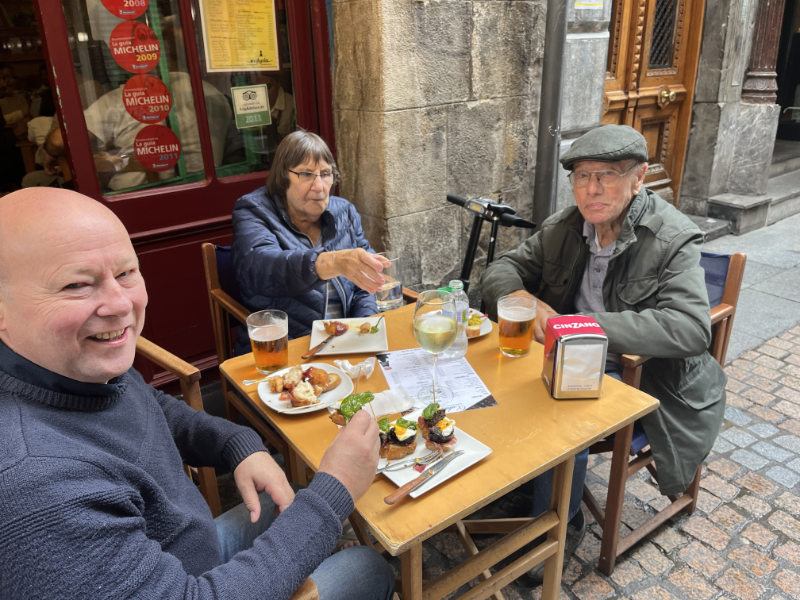
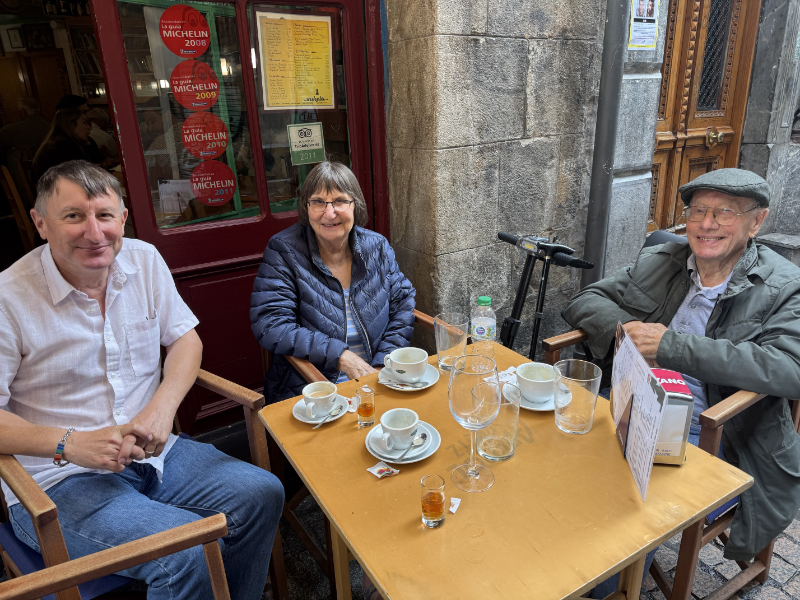
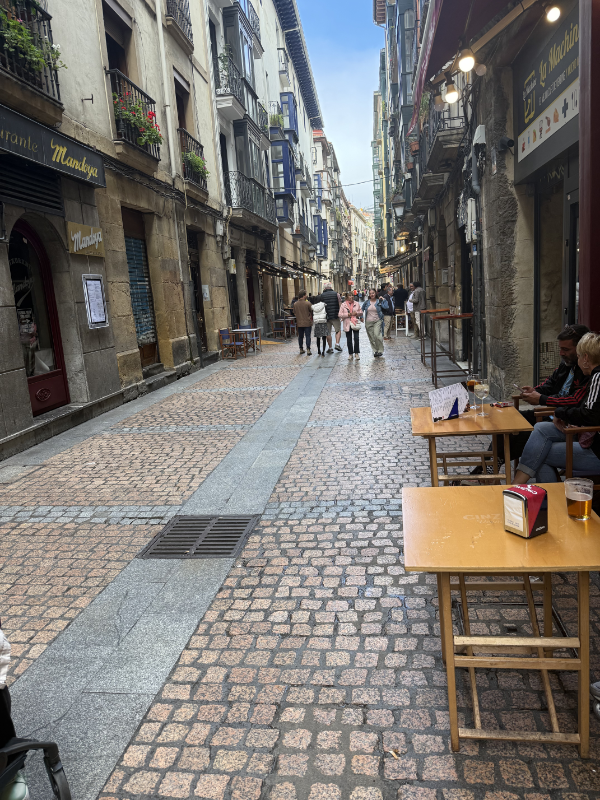
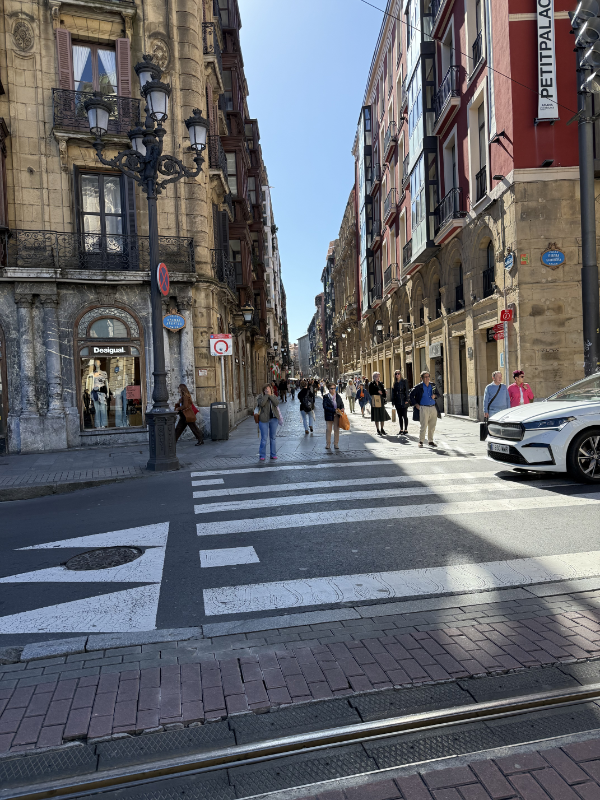

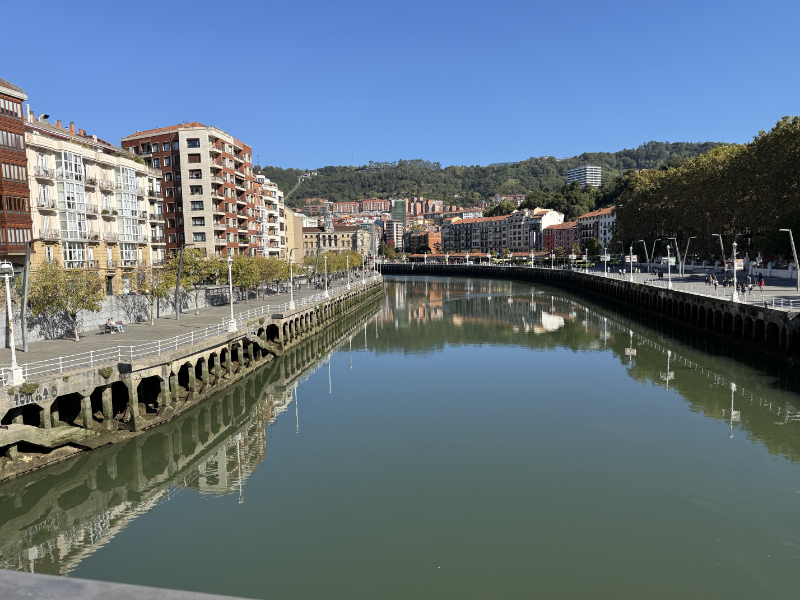
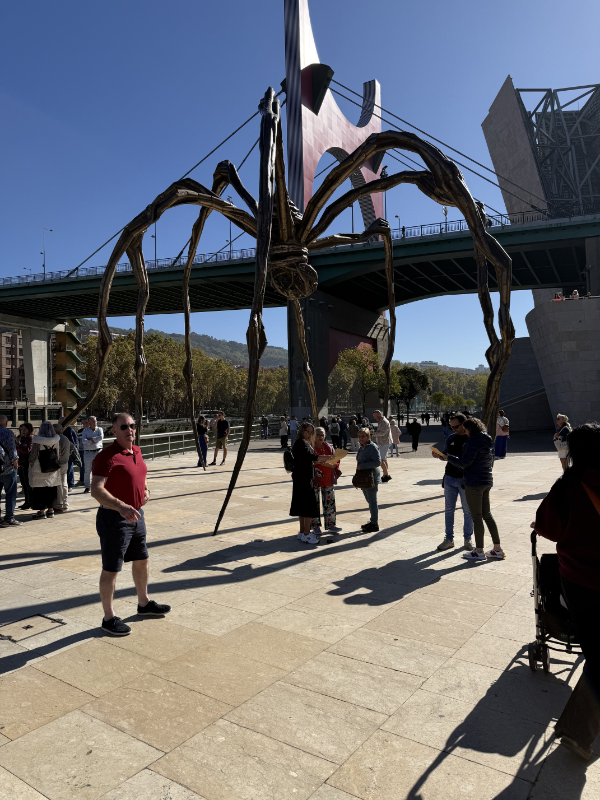
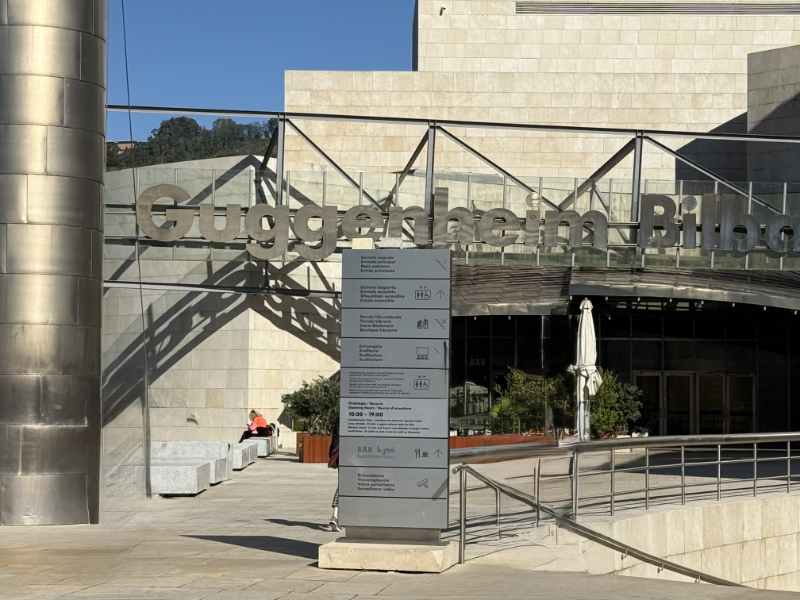
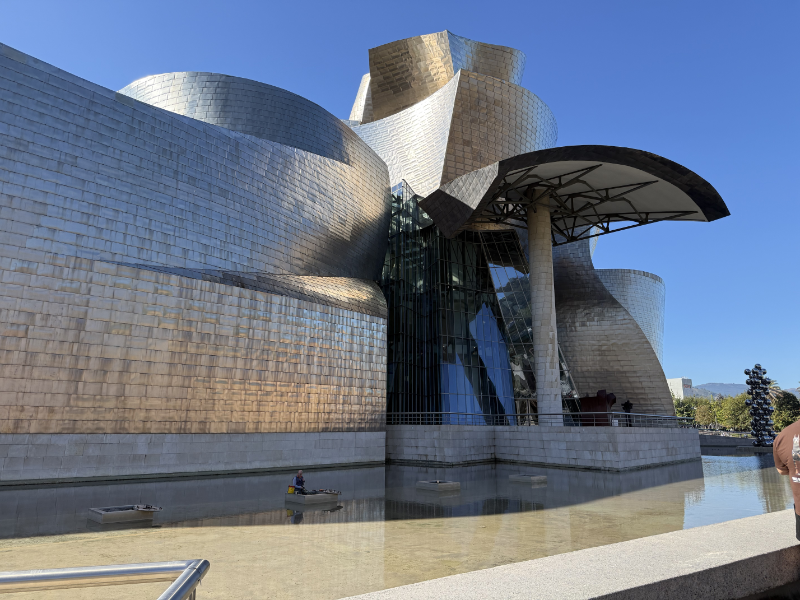
Of course, the other thing that is famous about Bilbao is the Guggenheim Museum. No visit to Bilbao would be complete without visiting. So, we did. Well, to be absolutely truthful we visited the building but not the museum. On the day we were there … Monday … it was shut! It is closed on Mondays from October to April, so that kind of stuffed us. We had a good look around (see photo gallery below) but didn’t actually get to visit the museum. The one thing that we will say though is that Bilbao is a city that we would be very happy to visit again and the next time that we do, we’ll make sure that we visit the Guggenheim on a day that is not Monday!


Tuesday saw us arriving in Gijon (pronounced as “che-chon” using the “ch” as the sound of “ch” in loch) which is about 140 miles west of Bilbao. Gijon is the largest town of the Asturias with a very busy sea port and a lot of historical architecture. Asturias is known for its milk products and its cider production. Since I am lactose intolerant, I avoided the milk products but Captain Clarke did manage to procure some Turrón which he said was very good. (Turrón is a kind of nougat that is very popular in Spain and is made from honey, sugar, egg white, almonds and milk.) It would have been good to try the local cider but since that is made from apple juice and, since I am also fructose intolerant, apple juice is one of the worst things I can drink so that was out too! The weather was superb at around 24℃ and very sunny. Another thing that Gijon is known for is its railway. It was the first railway to be built in Spain and has led the way in railway technology throughout its history. There is a very good railway museum in Gijon with free entry but you do need to read Spanish to get any real benefit from it as most exhibits have commentary only in Spanish and you will otherwise simply be looking at old railway engines and carriages with no idea why they are in the museum. We did enjoy it though and found it very interesting.
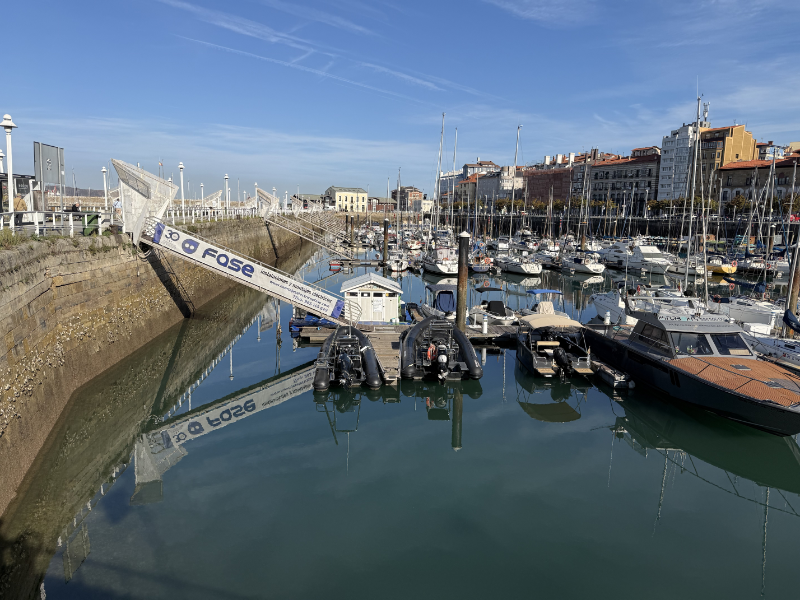

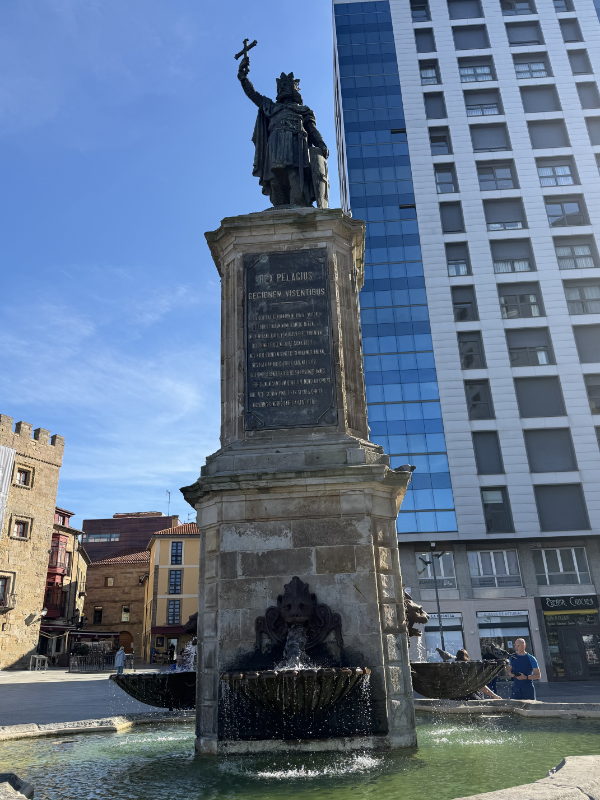
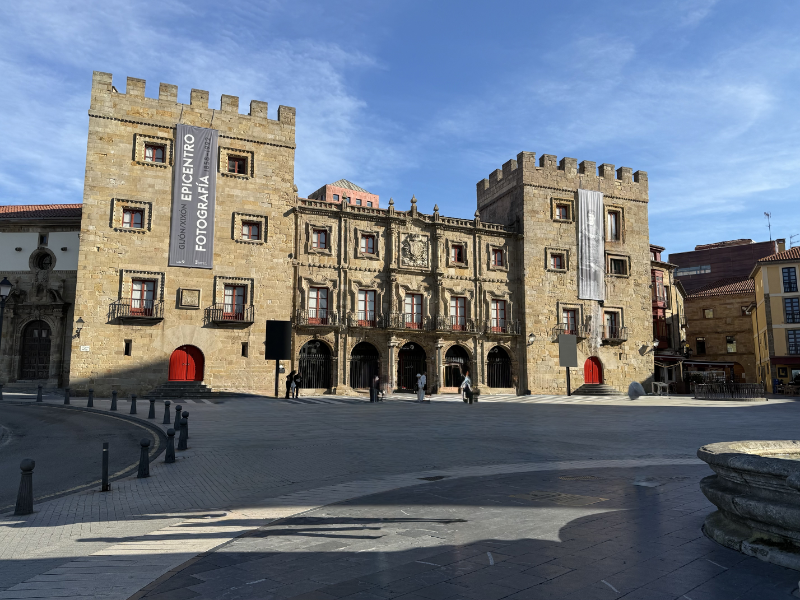
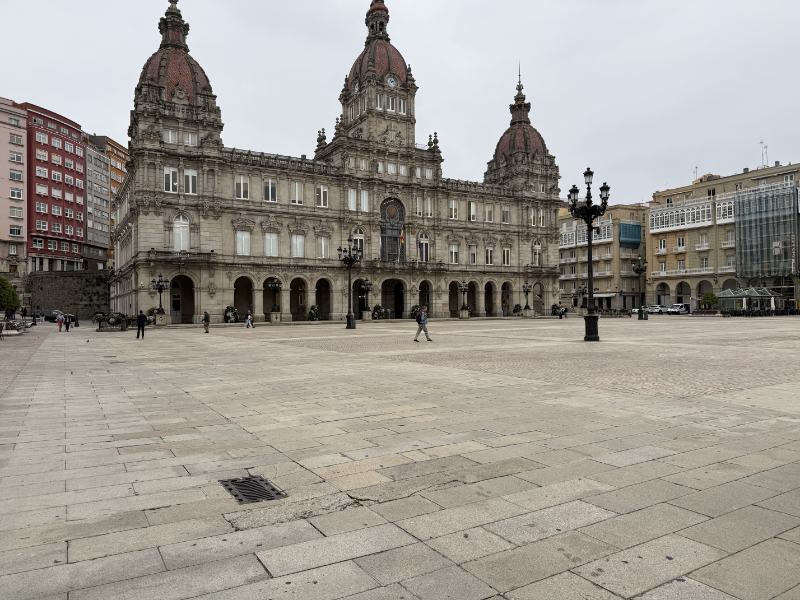
Leaving Gijon on Tuesday evening we sailed onto La Coruña, arriving on Wednesday morning. Sadly, La Coruña was very overcast and not very warm. We did, however, enjoy a good walk around the town. The one thing that struck us though was that La Coruña is not particularly spectacular and is just like any other Spanish town. It is a bit unremarkable. During the course of the cruise we have teamed up with a lady called Debbie for the early evening quiz who is travelling alone (weirdly, we would have said that taking part in a quiz every day was the last thing we’d enjoy but it is actually quite fun!). When we sat down and were chatting about the day Debbie said that she had found La Coruña a little disappointing, which is how we would describe it. During our visit there were a lot of works (obras) going on which didn’t help and all of the descriptions of the works (there is a tramway being constructed we think and an extension to the harbour we think and various other projects) was in Galician. Yet another language we don’t know anything about. People usually just think of Spain as being a country where Spanish is spoken, but that isn’t really the case. What is known as Castellano Spanish is what we all think of as Spanish but there is also Catalan which is spoken in the east of the country all the way from the north at the French border (it is also spoken in France) to the south around Alicante. Catalan is about as different a language as Welsh is to English, by way of example good morning in Castellano is Buenos Dias, in Catalan it is Bon Dia. There are dialects too, Mallorcian is a dialect of Catalan, as is Menorcan, Ibithan and Valenciana, amongst others. In the foot of the Pyrenees Basque is the primary language, further into Spain but still in the Basque region, Basque is less prominent. Moving across to the west the language is Galician and, like Catalan, the people are quite militant in defending their language and use it almost exclusively. There is also Aranese Occitan which is spoken in some regions of Catalonia, primarily near to the French border where people in southern France also speak it. There are many other languages spoken in Spain but the official five are only those recognised by the Spanish government.
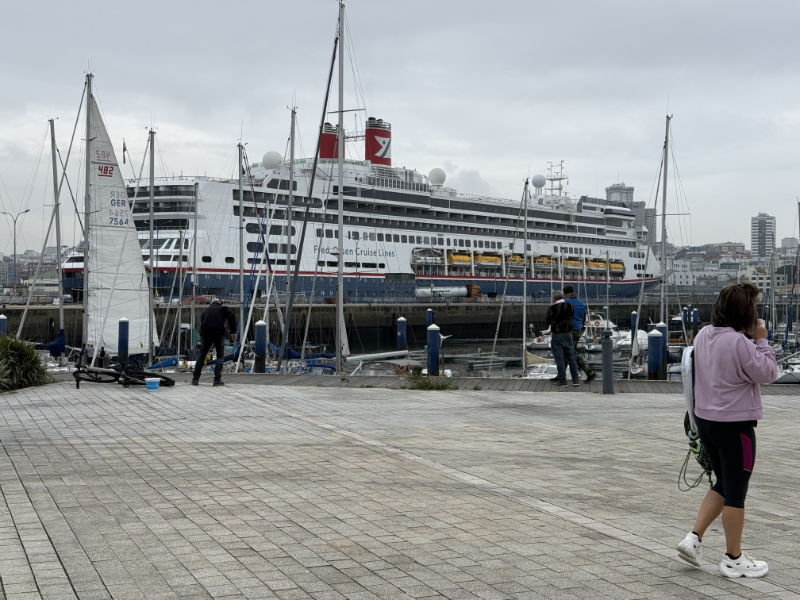
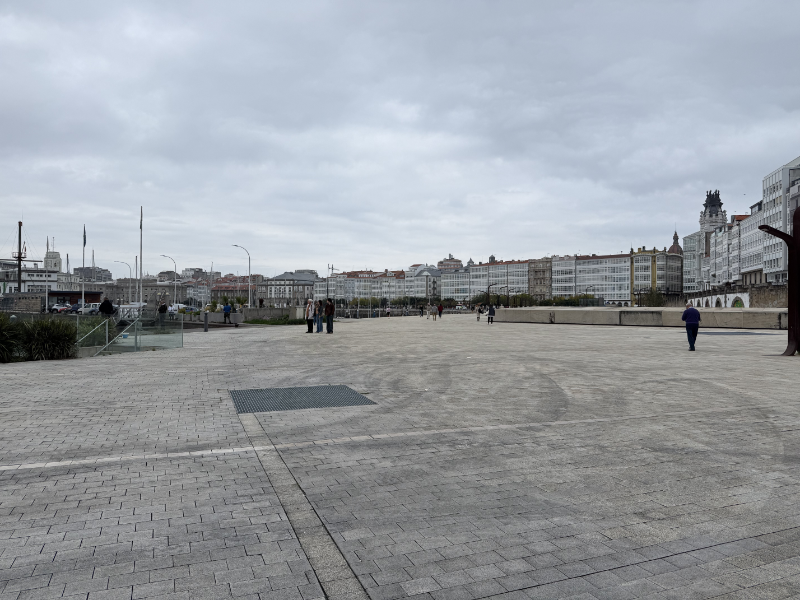
So last night, Wednesday, we left La Coruña and began the journey back to Southampton to end the first part of our cruise. The trip back across the Bay of Biscay was not quite as eventful as the trip on the way to Bilbao. We have looked back and decided that, whilst it wasn’t a particularly pleasant 36 hours, it wouldn’t put us off cruising. We have thoroughly enjoyed this part of the holiday and it was just unfortunate that we encountered such a heavy storm in the first couple of days. It is behind us now and we are looking forward to the next leg of our trip up into the Arctic Circle. The entertainment on board has been generally excellent. The Borealis Theatre Company have put on a couple of really good shows and are doing another show this evening. Berni Flint who was the last person ever to win Opportunity Knocks and also the longest lasting act has done a couple of good shows that have been both funny and musically entertaining. We had a violinist called E. Sarah Carter who was very good. None of us are really into violin but she was actually very good indeed. This year the pianist in the piano bar has been far more dynamic than the player last time. His name is Jon Williams and he is both a good player/singer but he is also quite funny and doesn’t take himself too seriously. We have had good ‘banter’ with him.
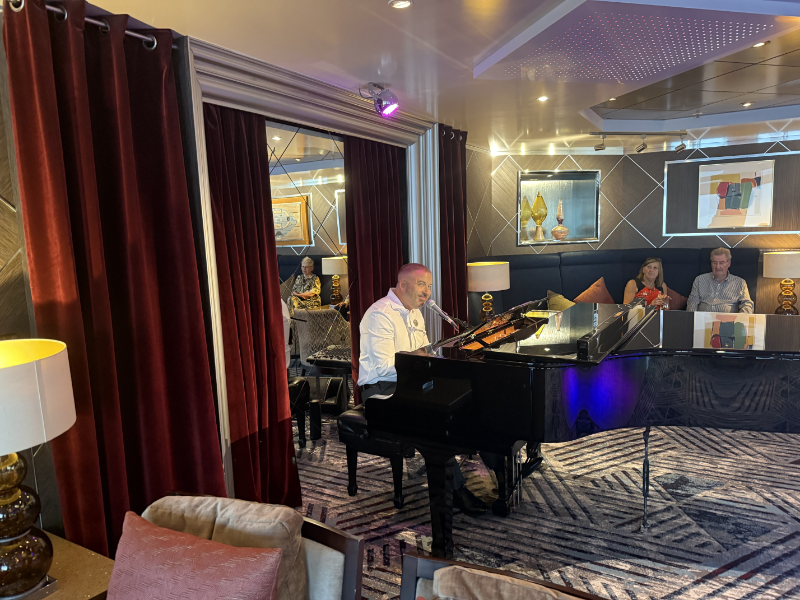
So, as this cruise draws to a close we look forward to the next one. Captain Clarke is, at this moment, taking another nap. His parents are packing as they move cabin in the morning (they’ve been upgraded!) and I am sitting listening to Jon playing one of his sessions. He took the Mickey out of me for arriving late (I arrived 5 minutes after he started) and I took the Mickey out of him because I am one of only about 12 people who are in this particular lounge. There are numerous lounges on this ship and often there is entertainment in several of them at once. The old dears (and there are many) tend to migrate en mass to lounges where the ‘ents’ suit their taste more. Jon appeals to a younger audience, but there aren’t that many of us!
Next stop is Southampton at 05:45 tomorrow morning. I do not intend to see that arrival! We then depart tomorrow evening for Norway and up to the Arctic Circle “In Search of the Northern Lights”. Now, I am not one to complain but a) I’ve worked in northern Sweden, so I’ve seen them before, b) this year if you opened your front door, you could see them and c) I’ve spent thousands on this cruise, so I don’t want to search for the flaming lights, I want to see them!! So, until my next missive, adios (it’ll be Ha det next week!)!

As superb missive!